Major Graduate Projects
The following is projects that we did as graduate students between 2005 and 2010 under Prof. Richard Stern. For recent projects at Google, please refer to my LinkedIn page- DARPA GALE Project: Robust front end for the DARPA GALE project. Applied a new feature set that we developed for the 180-hr training set and the large vocabulary Broadcast News test set.
- NSF Auditory Signal Processing Project: Developed features motivated by auditory processing, binaural processing, and poly-aural processing.
- Samsung Speech-to-Speech Translator Project: Developed low- complexity online algorithms for embedded processors. Developed an online noise-robustness feature extraction algorithm, a binaural source-separation algorithm, an online VAD, an online MVN, and supporting technologies. Applied the algorithm to a 64,000-word database with a 500-hour training set.
- Voice Activity Detector project: Designed a robust VAD which requires very low computation
Graduate Research Work
- Power Normalized Central Coefficients (PNCC): Motivated by human auditory processing, this new feature set incorporates modulation frequency, temporal masking, and rate-nonlinearity concepts. The features require low computation and on-line implementation is possible.
- Small Power Boosting Algorithm (SPB): Developed the SPB algorithm motivated by the human rate-intensity as well as temporal and spectral smoothing. This algorithm works especially well for non-stationary noise such as music noise.
- Dual microphone speech enhancement systems: Developed the Phase- Difference Channel Weighting (PDCW) algorithm which performs sound source separation without a priori knowledge of the source locations.
- Single microphone speech enhancement systems: Developed the Power- function-based Power Distribution Normalization (PPDN) algorithm which enhances speech.
- Automatic Speech Recognition with low computational complexity: focused on developing online algorithms, which are robust against noise with low computational complexity.
- SNR Estimation algorithm for speech: Developed a new algorithm which estimates signal-to-noise ratio.
- Automatic ITD threshold detection algorithm: Developed a new algorithm which can obtain the optimal ITD treshold for sound source separation.
- Dereverberation algorithm Developed Suppression of Slowly-varying and Falling edges (SSF): a simple algorithm for robust speech recognition that is highly effective in reverberant environments.
- HLab C++ Automatic Speech Recognition System: Developed a C++ HMM (Hidden Markov Model) speech recognition system from scratch.
- Power Normalized Voice Activity Detection (PN-VAD): Developed a new voice activity detection algorithm that is very accurate and computationally efficient.
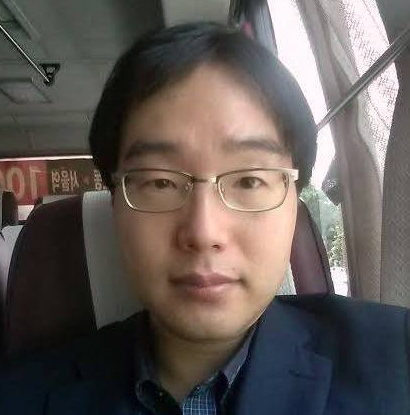 Chanwoo Kim