I've been at CMU since 1987 and involved with the ETC since its beginning in the late 90’s. During that period I was full-time in the Human Computer Interaction Institute and part-time at the ETC. Since coming to the ETC full-time in 2008 I’ve been having a blast. The energy of our students is incredible. This semester, Spring 2011, I’m advising three projects, “7”, Crime Scene Innovation, and Heavy Metal 2. Research for ETC projects includes things like trips to Las Vegas to study casinos, Florida for Pirate spring training camp, Penguins games in the team box, and Italy to lean about Italian Futurism. It’s tough, but someone has to do it.
My research includes interface designs that consider the complexity of multimedia objects, create high-fidelity environments, and incorporate an understanding of cinema and of digital video's temporal, spatial, and psychological nature. This research also aspires to take the captivating power of story and fantasy, and combine it with motivating design, for applications ranging from learning and entertainment to information access and scientific visualization.
An ongoing line of research is the Synthetic
Interview , a technology Mike
Christel and I created. SI's allow you to have an online conversation with
experts, celebrities, and even historical figures like Albert Einstein. National Science Foundation
funded research projects involving Synthetic Interviews include Physics
Teaching Web Advisory (Pathway) and ALPS: Putting a Face on Cognitive Tutors.
Pathways, part of the National Science Digital Libraries (NSDL)
program, is combining and extending Informedia and Synthetic Interview research,
with pedagogical advances developed Kansas State University Physics
Education Group to provide continuously improving assistance and expertise
for physics teachers.
Currently, Christel and I are working with several groups incorporating online Informedia technologies for accessing oral histories - IDVL. Partners include The HistoryMakers and the Harrisburg Living Legacy.
For short descriptions of some of my earlier work go here. For more information on all my work,
click below. For the masochist, there is a picture link at the end of the page.
For my far flung family and friends, take a look at some pictures
of the 'clan.' 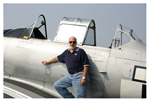
I wrote the following six years ago (as of early 2011) "I actually put new ones (as of June, 05) for the first time in 3 years. No promises, but I'll try to add more in less than 3 years." While hope springs eternal, I make no promise of my next update to my pictures. I did add a few publications a couple of years ago, so who knows and brought them up to date this change. I just fixed the broken links to the videos. But they are so old it's like looking at a 1980's John Travolta disco movie. Actually “Saturday Night Fever” was 1977 which really hurts. Nostalgic if you are old enough to have seen them on first release. Ridiculous if you are under 40.

