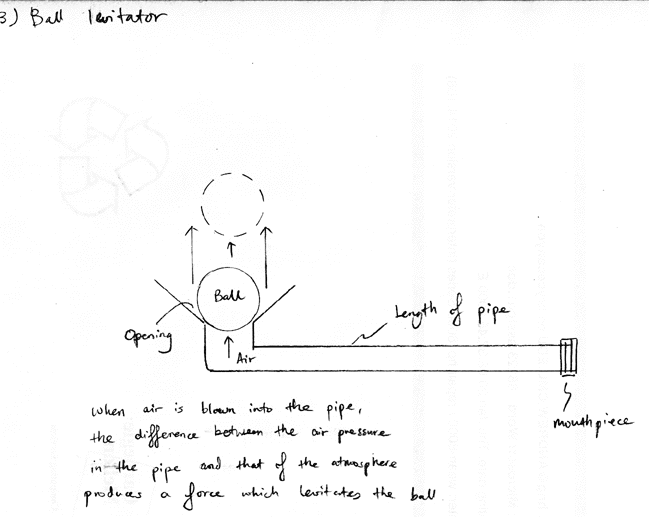
Physical principle:
Difference in air pressure produces force. When air is blown into the mouthpiece,
at first the ball separates the exterior air from the air in the tube. This
creates a pressure difference between the atmosphere and the air within the
pipe, producing a force which lifts the ball upwards into the air.
Subsequently, if there is a continuous stream of air supplied into the levitator,
the ball will be kept levitated. It will rarely "tip over" the upstream
of air because of the funnel-shaped opening which channels a stream of air around
the ball as well as underneath it.
How to play:
Place the ball into the opening, blow into the mouthpiece and try to
keep it in the air! Play should preferably be conducted in large open spaces
or outdoors.
Technical information:
- Cost:
Initial estimate is $10. A long plastic pipe or tube with a circular opening
constitutes the main component. Every part can be made of plastic.
- Durability:
The common plastics used in toys can be used as they are proven to be non-toxic
and reasonably durable. This toy will not be subject to large stresses or strains,
so durability is not a major concern.
- Safety:
Emphasis on rounded edges is a priority. As the child is moving, care must be
taken to ensure that he/she does not accidently shove the tube too deep inside
his/her mouth. This can be prevented by building a guard on the mouthpiece.