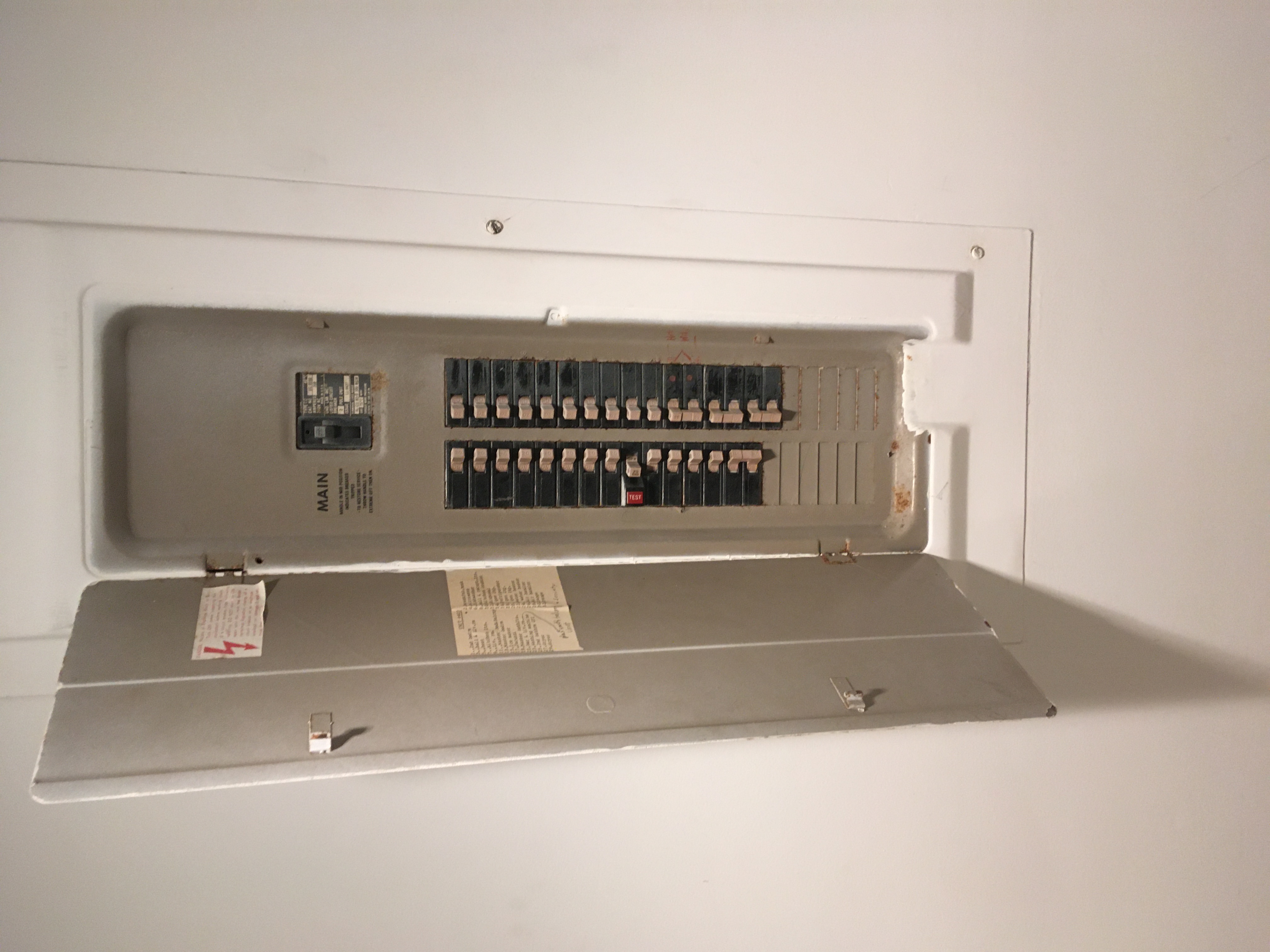
A Case Study: Opening And Closing Doors
Under Construction
The goal of this page is to try to outline how to get a robot to
open and closing doors.
The overall approach
The common element of these primitives is to move a relatively flat thin
rigid object to access what is behind the object
(opening) or to block or cover it (closing). I will use the term door
for such objects, including windows, hatches, gates, lids, caps, and box
flaps.
Some doors are not connected to an enclosing frame (free doors).
Other doors are attached along
one side to an enclosing frame or the rest of a container (hinges).
Some doors are pushed to open, and some have a handle and are pulled
or lifted to open.
I am going to use the term "lock" to describe any mechanism that holds a
door closed until the mechanism is manipulated or otherwise released.
We will take the approach that perception tells an agent what type of
door it is, how the door might work, and what mechanical constraints
are likely. Relevant behavior for that context
is recovered from a library, and a
"robot program" with symbolic (discrete, typically selection, variables)
and numeric (continuous variables, might be neural
nets) parts is constructed. Arguments or "slots" for subroutines called
in the program are assigned. Error detection and handling subroutines are
also constructed. During nominal execution the program completes, and
when large errors occur realtime re-planning may occur.
A door taxonomy
A broad view of the concept of doors includes windows, hatches on boats, lids and caps on containers, suitcases and trunks, and folding parts of cardboard boxes.
This taxonomy just focuses on a narrow view of doors, and
ignores handles and locking mechanisms, which are independent of the taxonomy below.
The highest level distinction is whether the door is attached, and then
we distinguish between doors that are in a vertical
plane, vs. doors in horizontal or other tilted planes. Then we
consider how the door moves.
Free doors
More like a large lid or cap. No hinges or sliding mechanisms. May be in any orientation.
Vertical doors
-
Rotary doors with a vertical axis
This is the most common type of door.
Examples,
more,
more,
more, and
more.
-
Hinged door: The most common type of door.
-
Swinging doors: Hinges allow opening in both directions, typically
with a spring closure mechanism. Small swinging doors in bars and saloons are known as "bat wing" doors.
-
Pivot door: Axis is not on edge of door but somewhere in the interior of the door.
-
Revolving door: Typically a rotary four leaf door with an
axis at the center.
-
Folding door: Often found in closets, can have 2 parts or more (accordian door), collapsible doors (planar grille that folds up in the plane of the door).
-
Multi-part doors: Dutch door (half leaf),
French door (double leaf)
-
Rotary doors with a horizontal axis in the door plane
-
Axis above panel:
DeLorean car door, some overhead kitchen cabinets, many boat hatches (self closing)
- Axis below panel:
Spacecraft doors (landing ramps) in movies and fronts of landing craft.
-
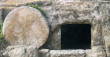
Rotary doors with a horizontal axis with a component out of the door plane:
Rolling door that rolls out of the way (planar or spherical) (Stereotypical
door to cave dwelling, but hard to open or close from inside.)
Click on the image for higher resolution.
-
Horizontal sliding doors (in door plane):
Sliding door, pocket door (slides into wall), barn doors hung on rails, bypass door (panels overlap)
-
Horizontal sliding doors with slides with a component out of the door plane:
This is usually part of a multi-degree-of-freedom door mechanism.
-
Vertical sliding doors:
Freight elevator doors, rolling shutter (tambour) doors, garage doors, overhead/up-and-over doors (single panel/leaf vertical sliding doors),
Horizontal and tilted doors
-
Hinged:
Trapdoors, boat hatches, toilet covers
-
Sliding:
Boat hatches
Other types of doors
-
Doors in other doors:
Doors within other doors are often found in cathedrals and other older buildings with large doors, and are known as wicket doors. Pet doors are in this category.
-
Elevator doors
-
Curtain doors: Cloth, bead, and string doors.
-
Non-material doors: Virtual doors created by lights in reality or in augmented reality.
What perception should provide
Based on context, 3D shape, estimates of materials, estimates of material
boundaries such as color changes and cracks around a door,
visible parts of hinges and other
mechanisms, the position and type of handle, the perception system
should predict (probabilistically) the type of door, the mechanical
constraints on how the door moves, the type of handle and its affordances,
and the possible nature of the locking mechanism.
Contexts include the
exterior or entrance of an apartment, house, or public/commercial building,
kitchen,
closet, bathroom, other interior spaces of a house, window shutters,
a car,
a bar or saloon, or a supermarket entrance.
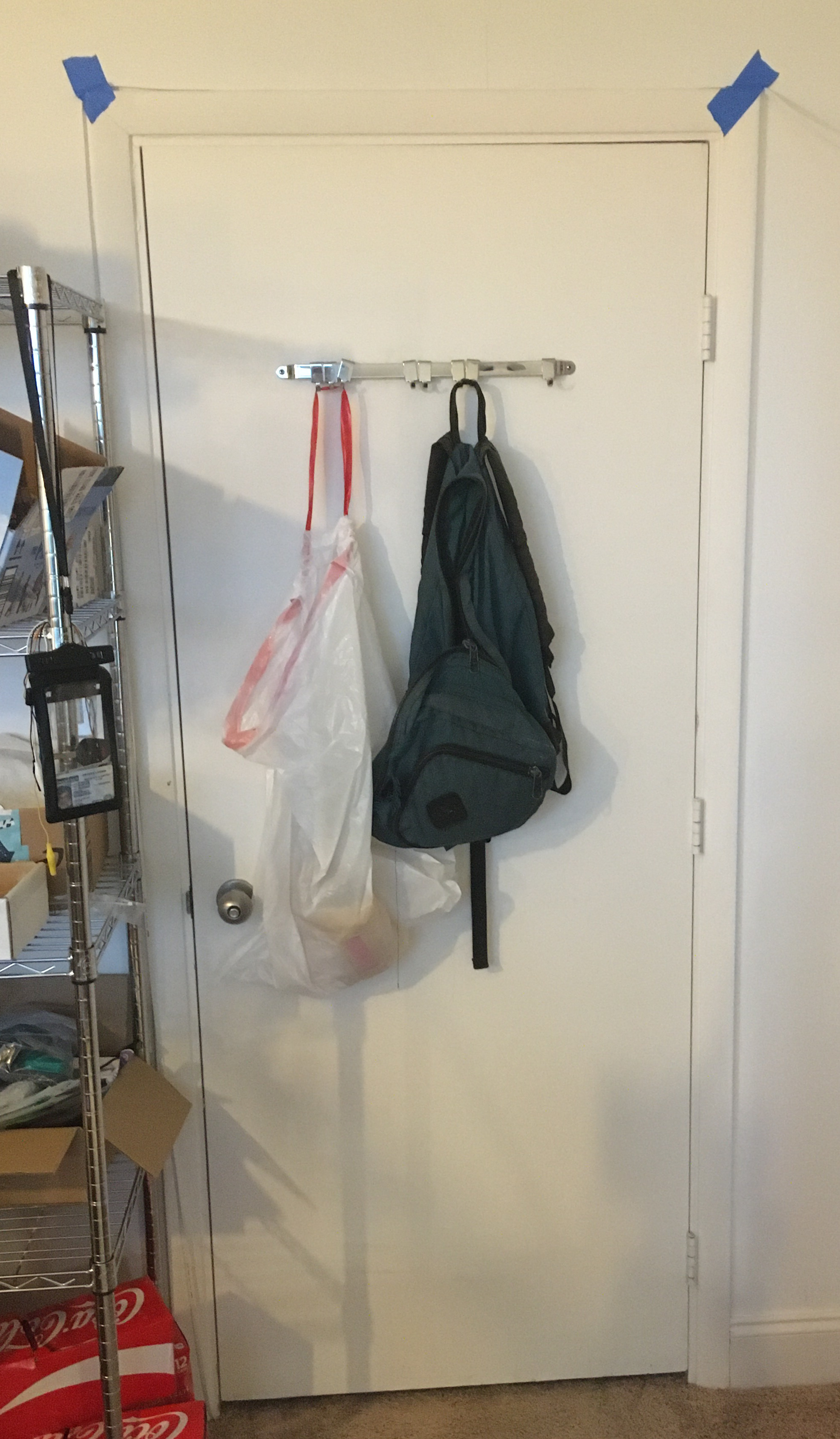
Examples
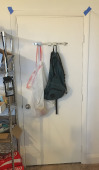
Where is the door?
The door is outlined by a "crack" or surface discontinuity as well as moulding.
How does it open?
The hinges, handle, and part of the strike plate (attached to door
frame next to handle with holes for a latch and deadbolt) are visible.
We can easily estimate the hinge axis and how the door will move. We
know that the door should be pulled to open since we can
see the hinges and the strike plate, and the door is flush with the
wall.
What is the stuff on the door?
Given the context, it should be easy to recognize it as a bar with hooks on it.
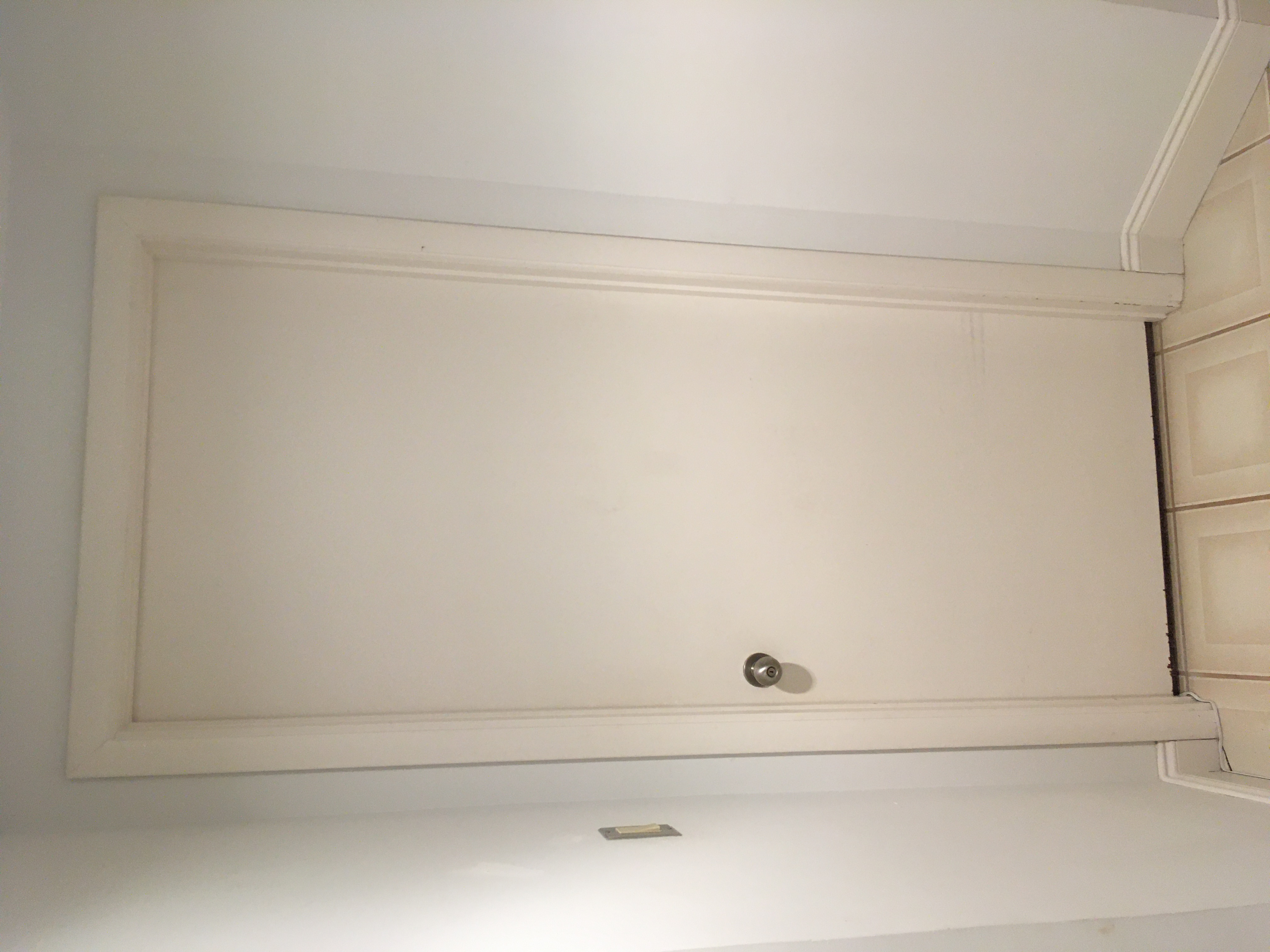
Click on the image for higher resolution.
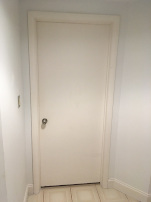
Where is the door?
The door is recessed in a frame, as well as being outlined by a "crack" or surface discontinuity and moulding.
How does it open?
The handle indicates that the hinges are on the other side of the door
(right side of the door from the agent's viewpoint).
We know that the door should be pushed to open since we can
see the door jamb, and the door is recessed relative to the wall.
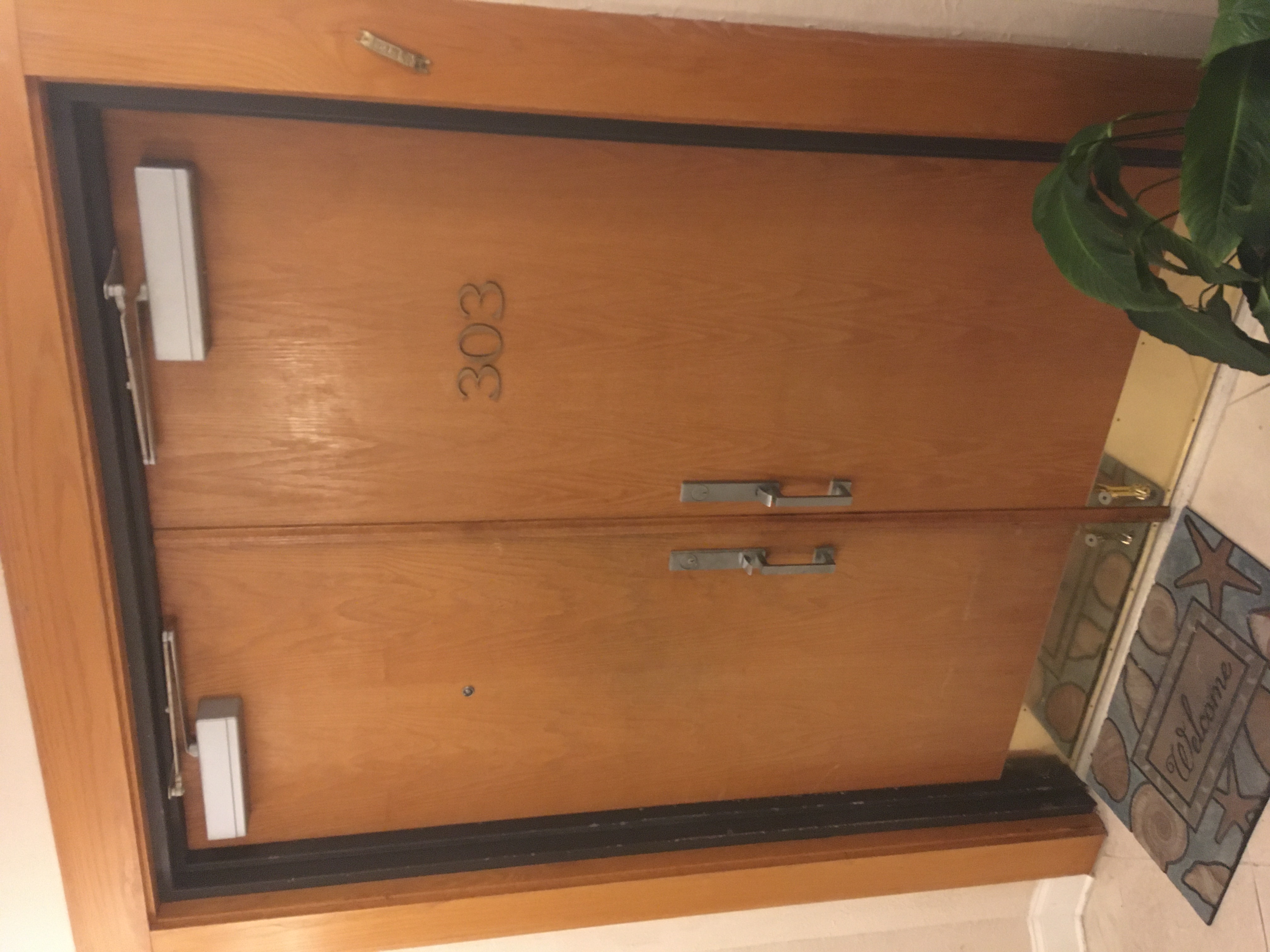
Click on the image for higher resolution.
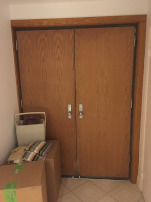
This is the entrance to an apartment, viewed from the inside.
Where are the doors?
The doors are outlined by a frame with a different color.
How do they open?
The two doors, and hinges, handles, and part of the strike plate (attached to door
next to handle with holes for a latch and deadbolt) are visible.
We can easily estimate the hinge axes and how the doors will move. We
know that the doors should be pulled to open since we can
see the hinges and the strike plate. The right door should be opened first,
because it has the deadbolt, and there is stuff in front of the left door.
Click on the image for higher resolution.
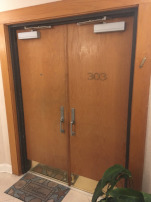
This is the entrance to an apartment, viewed from the outside.
Where are the doors?
The doors are outlined by a frame with a different color.
How do they open?
The handles indicate that the hinges are on the outer edges of the doors.
We know that the doors should be pushed to open since we can
see the door jamb, the door closers, and the door stops.
There is a strong prior that entrance
doors of apartments and homes open inward, for security reasons, as
the hinge pins are inside and cannot be removed from the outside.
The door on the left of the image should be opened first, as that is
where the keyhole is, as well as the welcome mat.
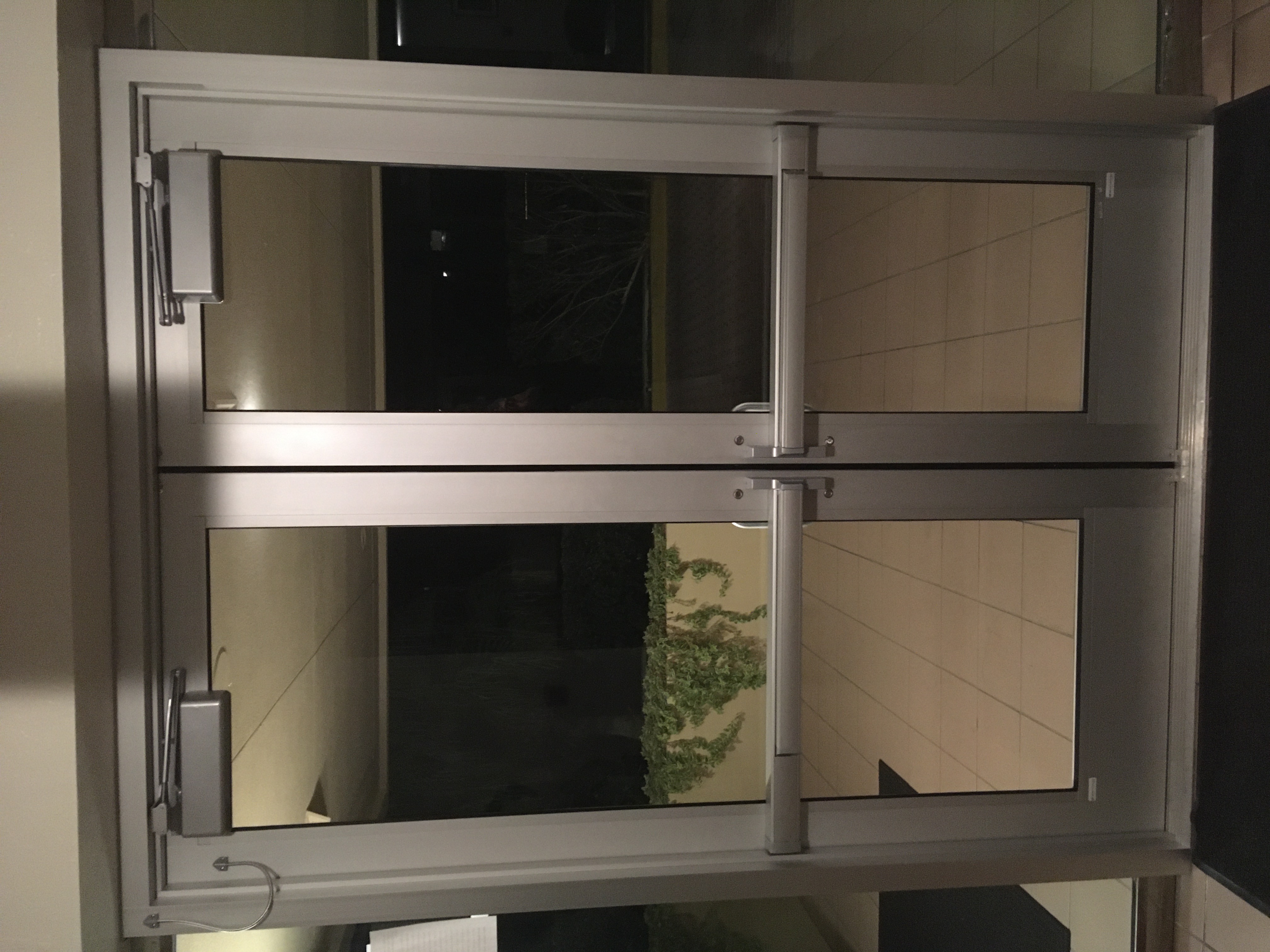
Click on the image for higher resolution.
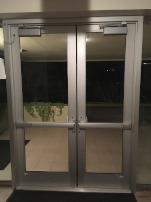
This is the street-level entrance to an apartment building,
viewed from the inside.
Where are the doors?
The doors are outlined by a "crack" or surface discontinuity.
How do they open?
The pushbar and the automatic door closers
make clear that the door swings to the outside of the building.
A strong prior is that building entrances (such as those at CMU)
are required to swing outwards by fire laws, so a panicked crowd does not
get pushed against a door they then cannot open. The hinges are on the
outer sides of the doors.
the door swings to the outside of the building.
A strong prior is that building entrances (such as those at CMU)
are required to swing outwards by fire laws, so a panicked crowd does not
get pushed against a door they then cannot open. The hinges are on the
outer sides of the doors.
Click on the image for higher resolution.
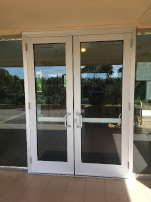
This is the street-level entrance to an apartment building,
viewed from the outside.
Where are the doors?
The doors are outlined by a "crack" or surface discontinuity.
How do they open?
The handles (grab bars) and the visible hinges indicate that
the door swings to the outside of the building.
A strong prior is that building entrances (such as those at CMU) are required to swing outwards by fire laws, so a panicked crowd does not get pushed against a door they then cannot open.
Click on the image for higher resolution.
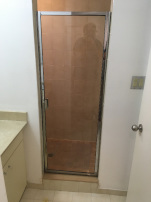

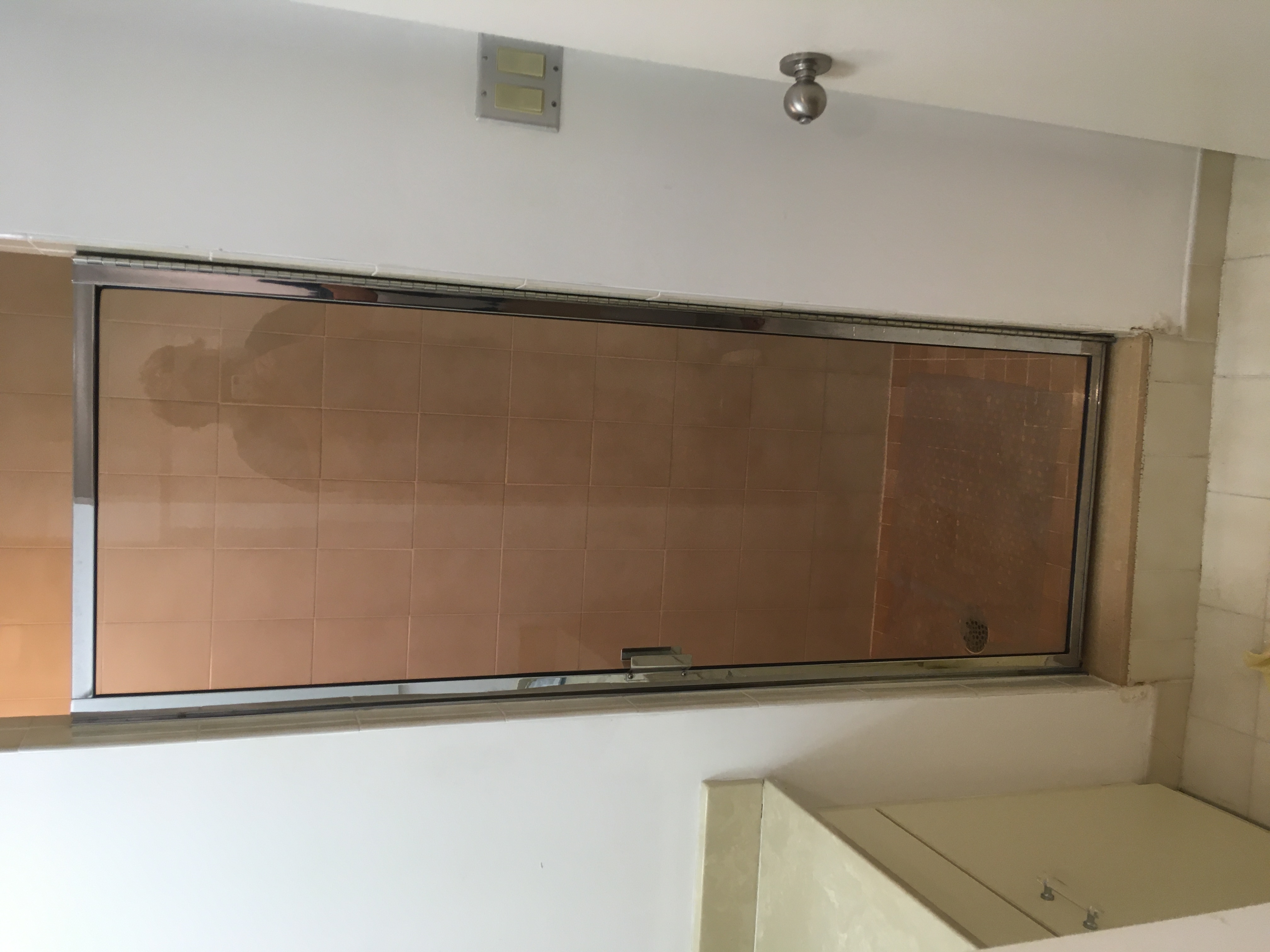
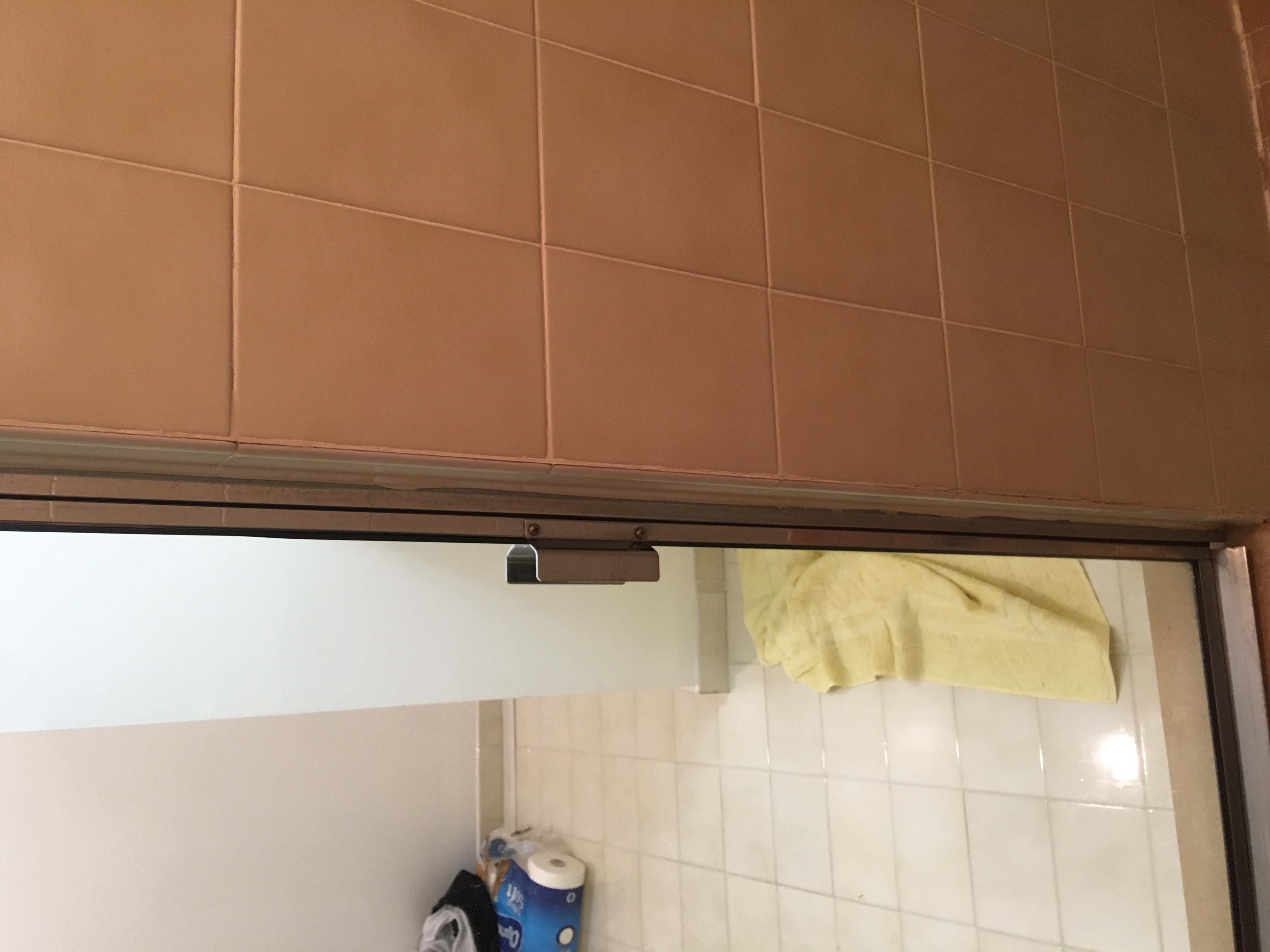
This is in a bathroom.
Where is the door?
The door is outlined by the wall as well as a "crack" or surface discontinuity.
How does it open?
The hinges and handle are visible.
We can easily estimate the hinge axis and how the door will move. We
know that the door should be pulled to open in the first image since we can
see the hinges.
Click on the image for higher resolution.
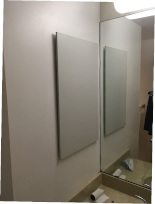
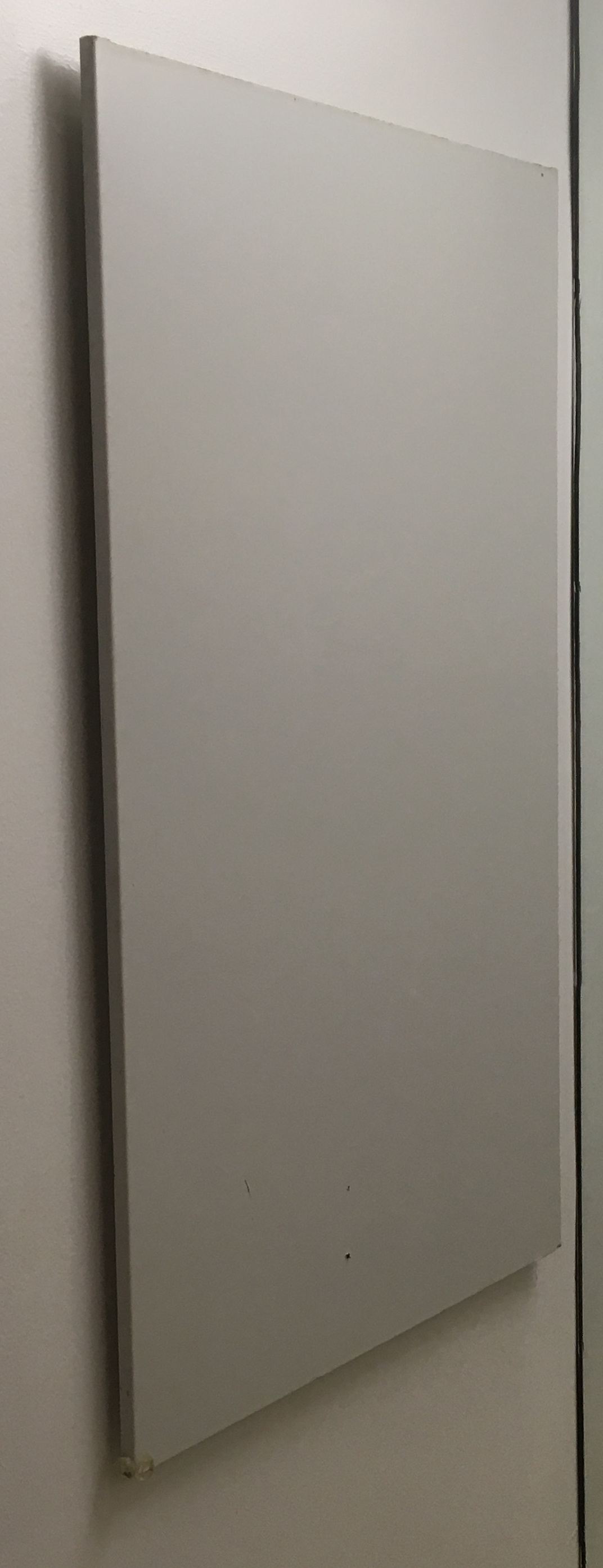
This picture is taken in a bathroom.
Is this a door? How does it open? What is the handle?
What is the locking mechanism likely to be, if any?
What do you expect to see inside? (Click on the image for higher resolution.)

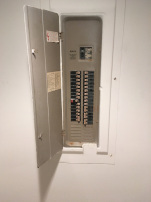
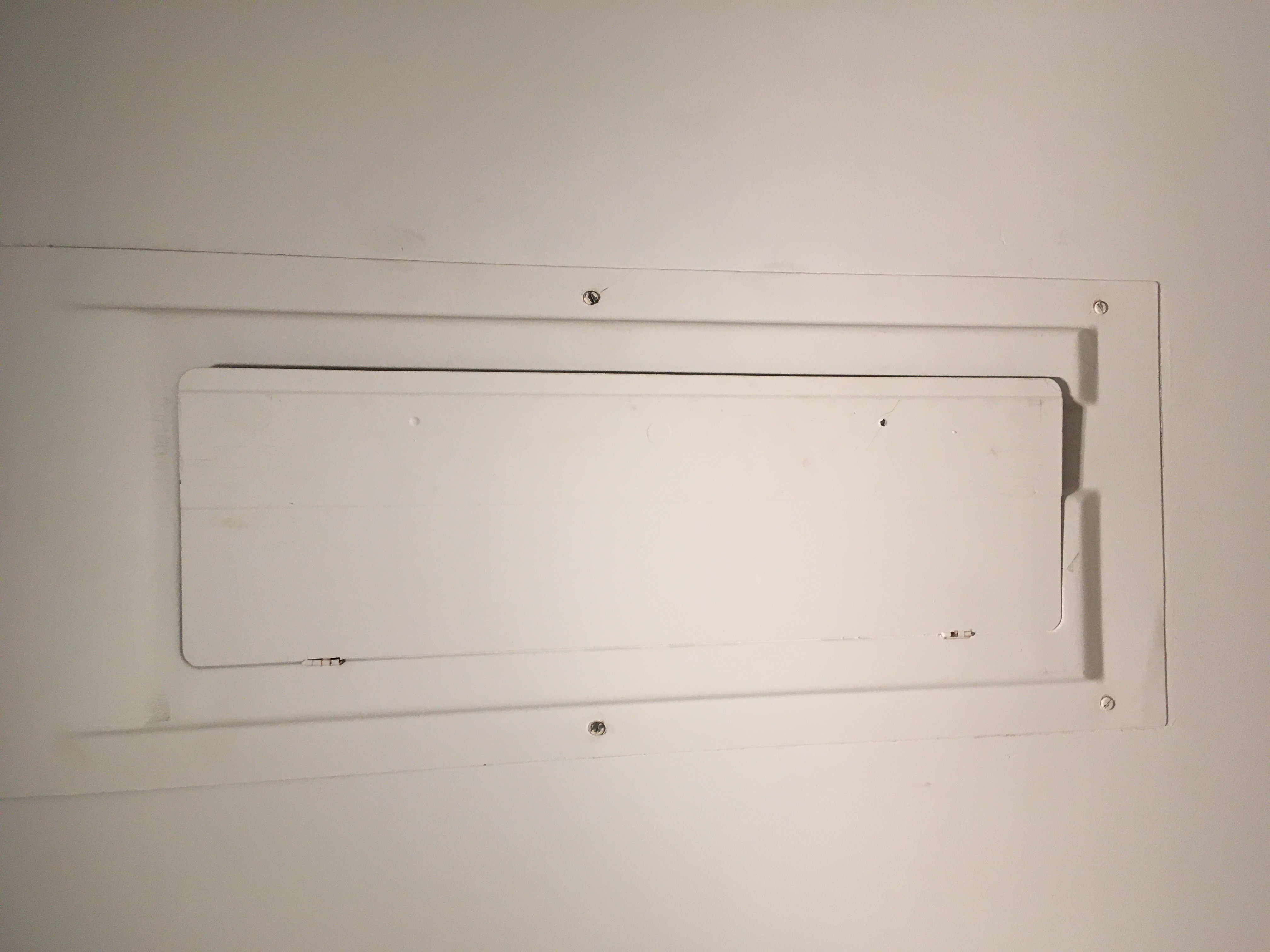
Where is the door?
It is outlined by several "cracks" or surface discontinuities.
How does it open? What is the handle?
The gap in the door "frame" on the lower left side is a clue to
reach under and pull there.
What is the locking mechanism likely to be, if any?
A strong prior is some sort of deformation lock.
What do you expect to see inside?
See 2nd image.
(Click on the images for higher resolution.)

Where is the door? How does it open? What is the handle?
What is the locking mechanism likely to be, if any?
What do you expect to see inside? (Click on the image for higher resolution.)
Ever seen a front loading washer?
(Click on the images for higher resolution.)
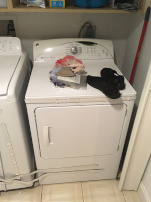
Where is the door? How does it open? What is the handle?
What is the locking mechanism likely to be, if any?
What do you expect to see inside? (Click on the image for higher resolution.)
(Click on the images for higher resolution.)
An unusual door.
push locks on cabinet doors
ball locks

door knocker
doorbell
doorstop

car hood
cover