| 11 Rows |
|---|
 Albertite
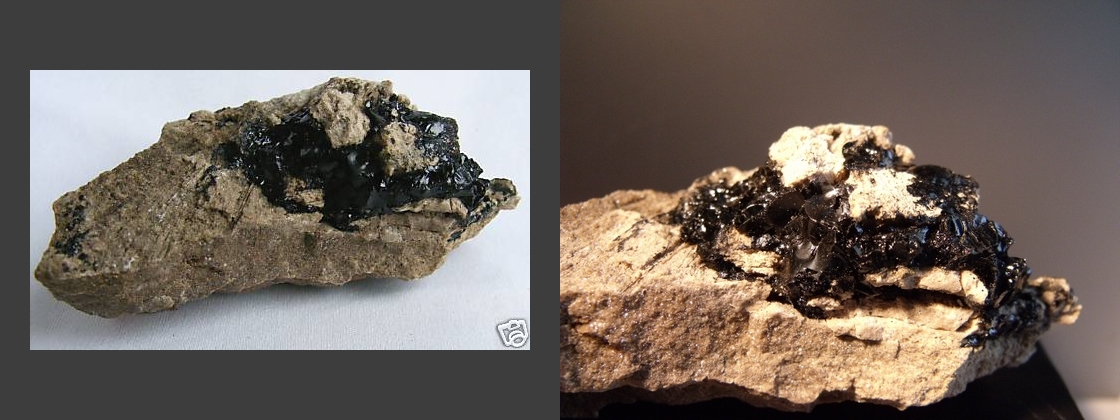
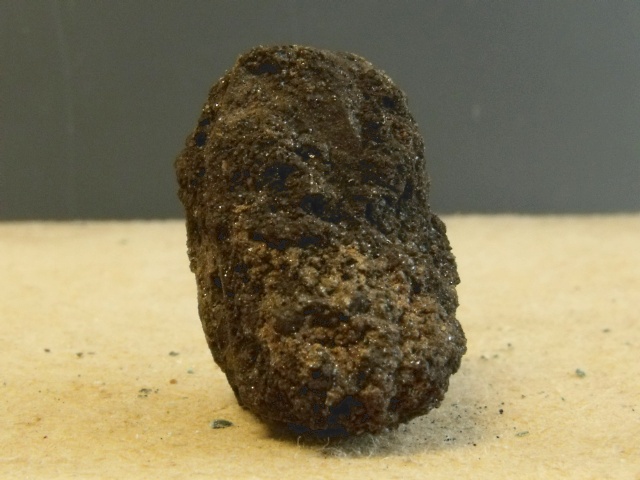
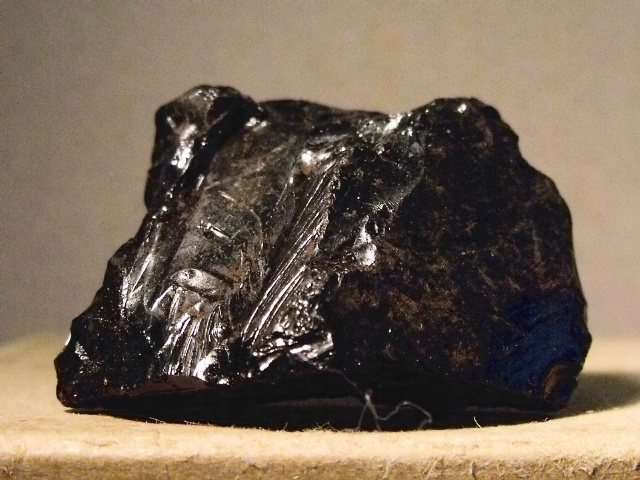
This small cabinet specimen of shiny black albertite in matrix is from Dundas, Hamilton, Wentworth County, Ontario, Canada. It's actually not albertite but a similar crystalline hydrocarbon as yet unidentified. This material started appearing at Dundas in 2009 - the organics there have not been studied to any great extent. Thanks to Stuart Collier's auction on eBay for the specimen and the image! |
|
 Anthraxolite
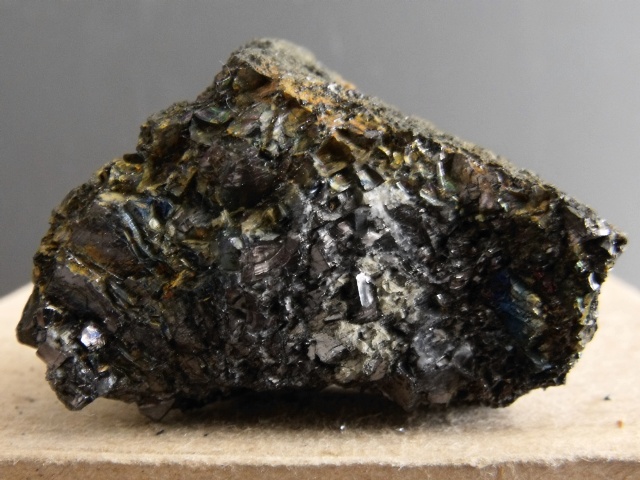
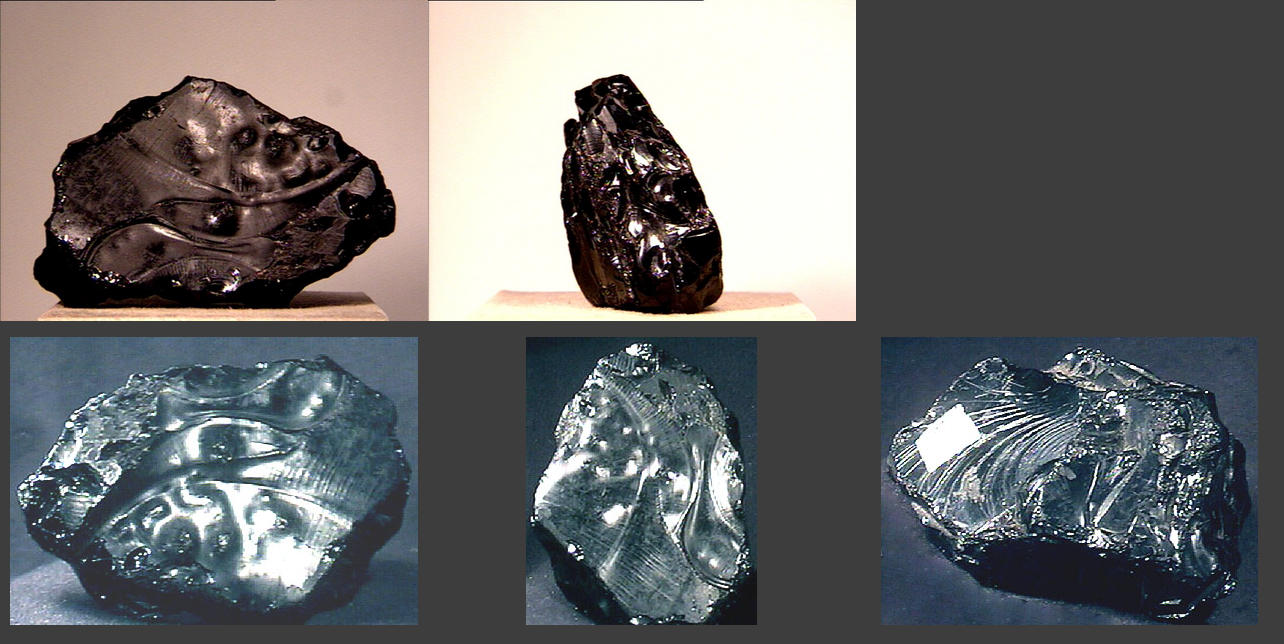
An excellent miniature of anthraxolite, a high-carbon coal, from the Sudbury Basin area of Ontario, Canada. It occurs in a fissure vein in slate, originally as bitumen. But, having lost most of its hydrocarbons and oxygen to the ages, it became compositionally close to anthracite (hard coal) burning with a bright blue flame but with lots of ash thus making it a poor substitute for anthracite. Anthraxolite also occurs as inclusions in "Herkimer diamond" quartz crystals (lower right corner of image). Some references consider anthraxolite to be a synonym for pyrobitumen. Thanks to Jonathan Green's auction on eBay for the specimen! |
|
 Bitumen, var.
Elaterite
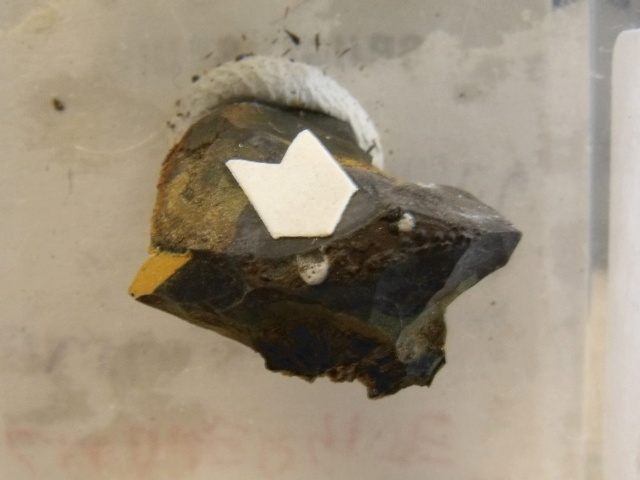
A miniature of black elaterite with white inclusions from the Windy Knoll Quarry, Castleton, Derbyshirem England. It's an elastic variety of bitumen, shown to be a branched polythene with essential sulphur. Hardening after exposure to air, it was used in the 19th century for caulking and roofing. Ex: Ralph E. Merrill (Minerals Unlimited) personal collection with a Mineral Zone tag. Thanks to David Garske's auction on eBay for the specimen and the image! |
|
| Row 2 |
|---|
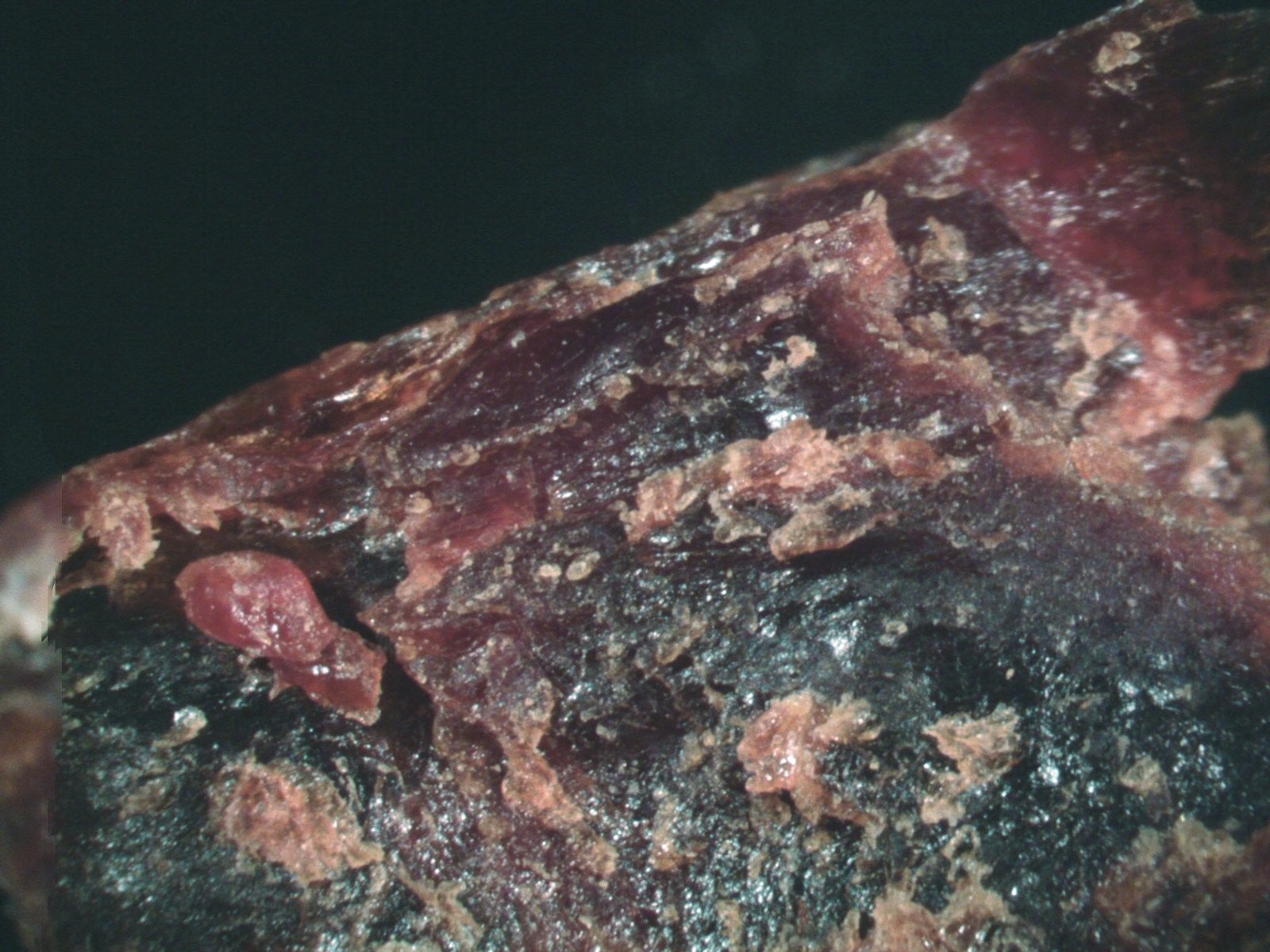
 Carpathite
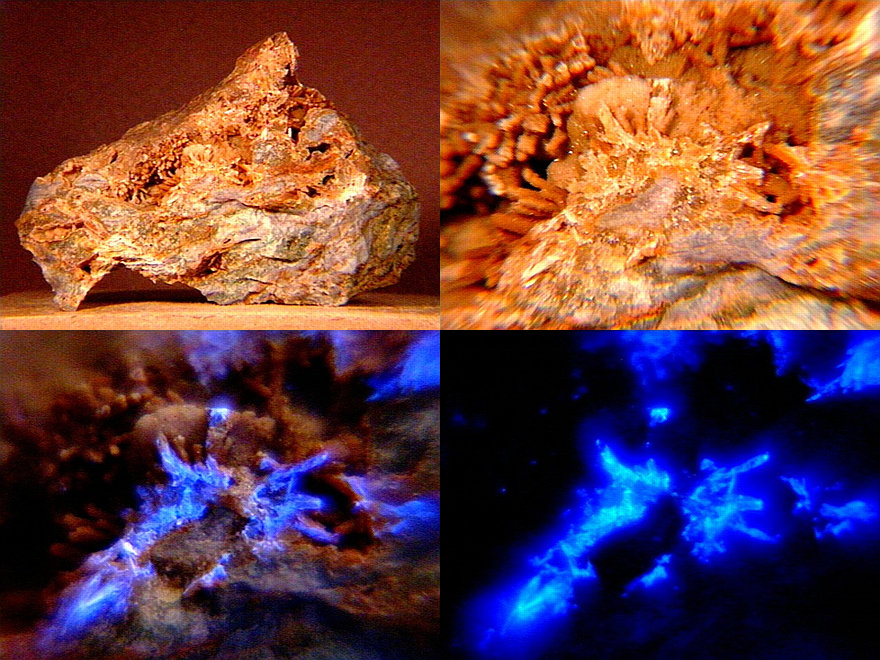
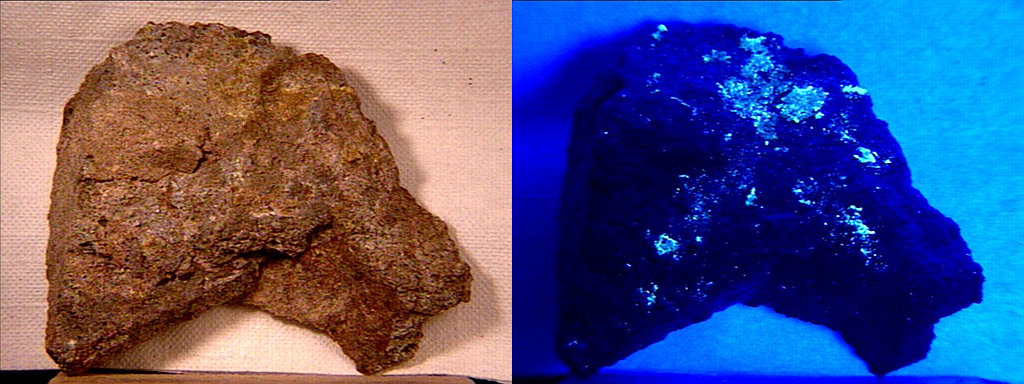
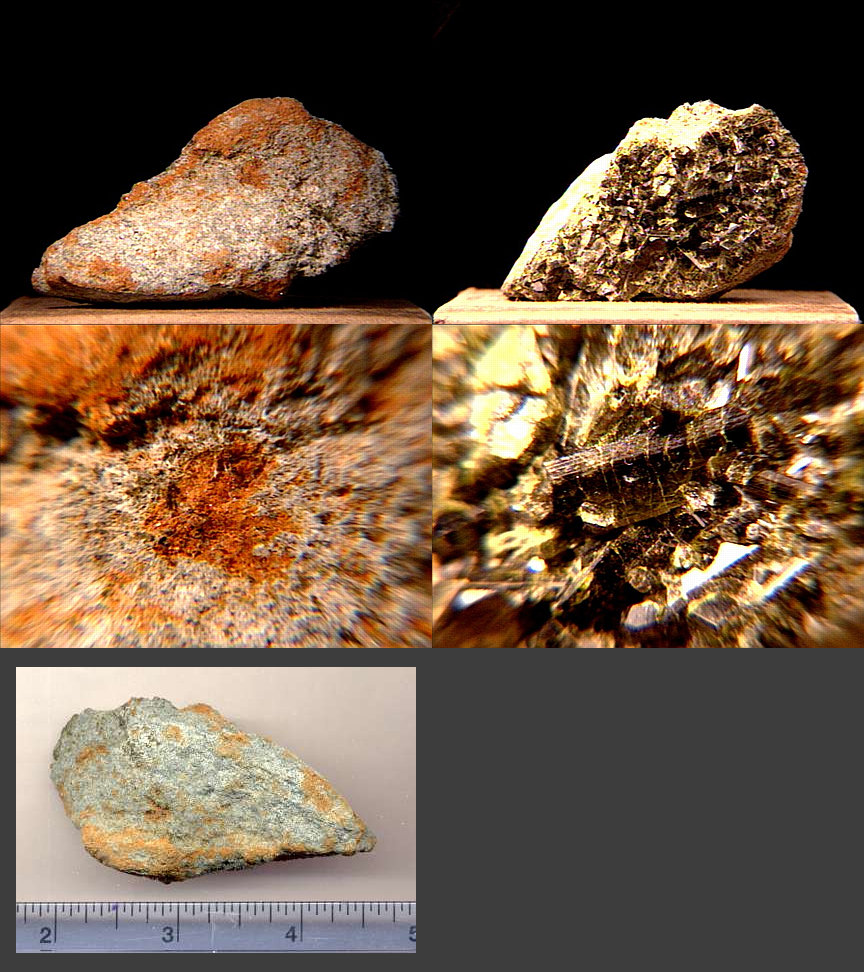
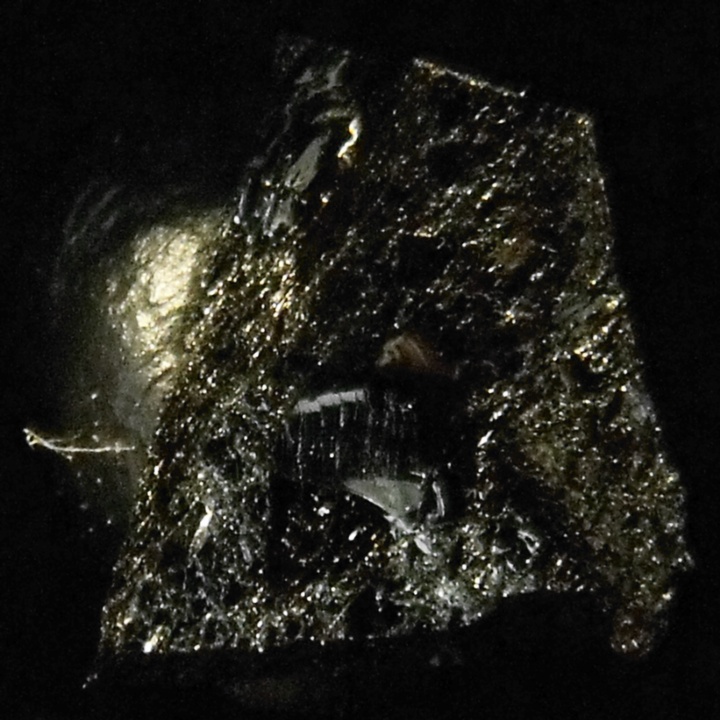
 (karpatite, pendletonite) or coronene, as it's known synthetically, is a fused group of six benxene rings. It occurs here on this specimen from the 4th of July Mine, near Picacho Peak, New Idria District in the Diablo Mountains, San Benito County, California, as radial light-yellow sprays on matrix. They are, like a lot of cyclic organic compounds, highly fluorescent (bright bluish-white, larger image). Thanks to Tony Nikischer at the Excalibur Mineral Company for the specimen! |
|
 Carpathite
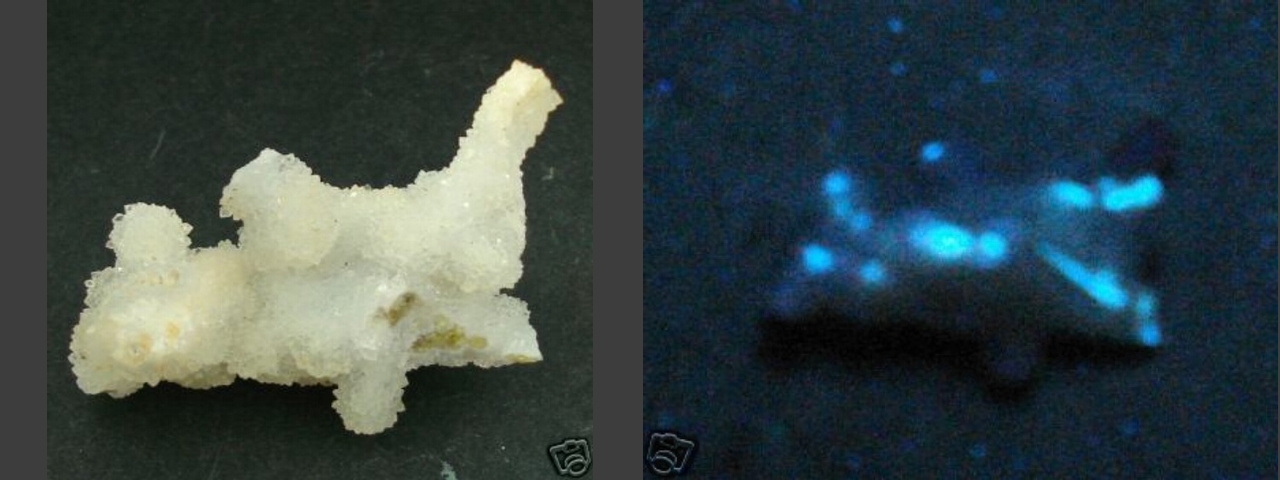
A large miniature of drusy quartz-coated carpathite crystals from almost the same location, the Picacho Mine in the New Idria District. Coronene is used for ultraviolet phosphor CCD coatings, most notably on the Hubble Space Telescope and has also been detected on the surface of Titan. Thanks to Rick Kennedy's (Earth's Treasures) auction on eBay for the specimen and the images! | |
|
 Curtisite
This is a small cabinet specimen of curtisite on sandstone from the mercury mine at Skagg's Springs, near Healdsburg, Sonoma County, California. Ex: Curt G. Segeler Collection - collected in December 1947. The tag has C24H18 as the formula. Curtisite was originally applied to a mineral described in 1926, which in 1975 was determined to be a mixture of hydrocarbons. Now it's considered a variety of idrialite (yellowish-green under LUV). This specimen, however, glows a bright mint-green under LUV. The formula matches that of p-quaterphenyl, a highly fluorescent chemical used in scintillators. The latest analyses of curtisite (and idrialite) show them to be complex mixtures of polycyclic aromatic hydrocarbons. Thanks to Val Collin's auction on eBay for the specimen! |
|
| Row 3 |
|---|
 Evenkite
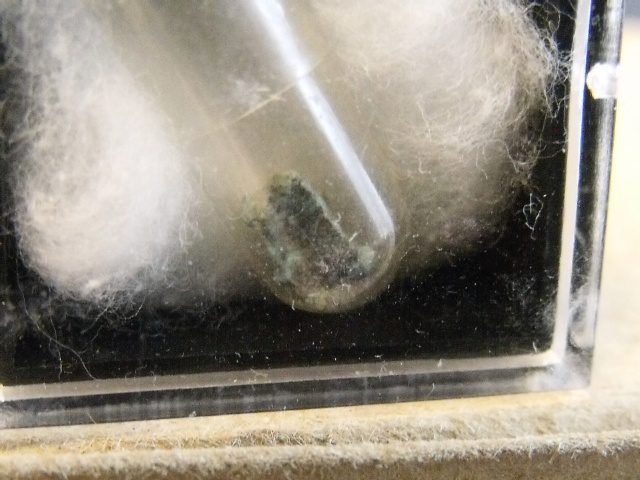
A capsule of colorless evenkite (typically n-heneicosane to n-tetracosane, a paraffin) from the Slávik adit, Dubník, Cervenica, Presov County, Presov Region, Slovakia. It's considered by some to be identical with hatchettite. Thanks to Gabor Koller's auction on eBay for the specimen and the image! |
|
 Fichtelite
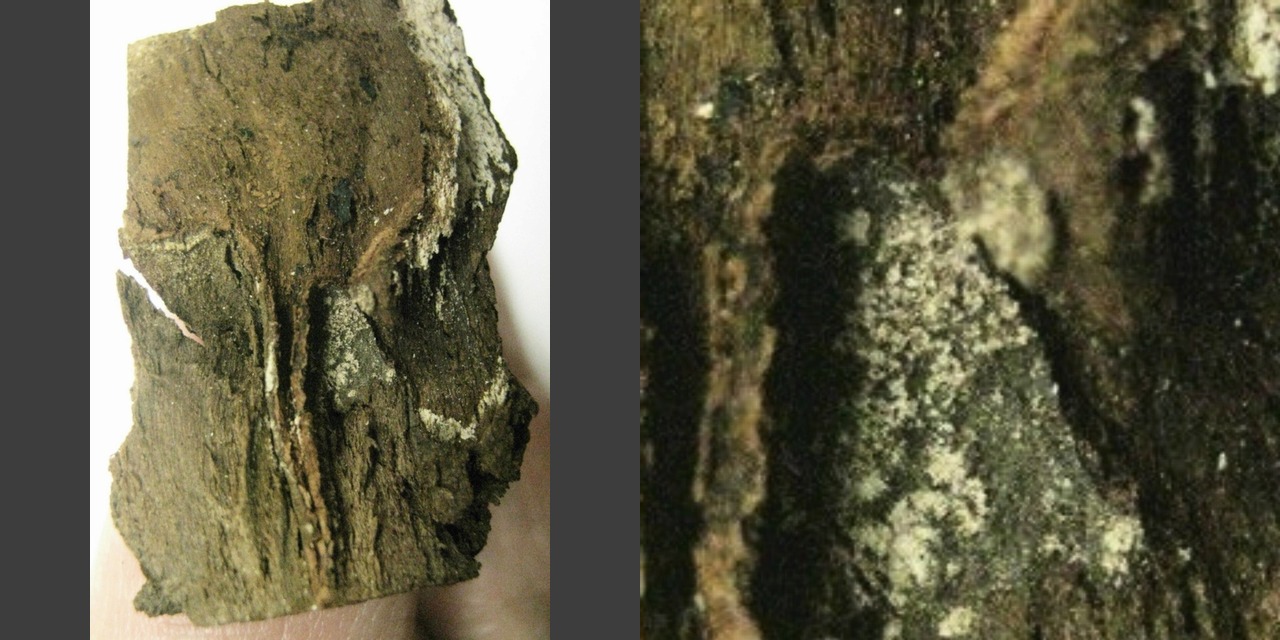
A miniature of submillimeter white crystals of fichtelite (dimethyl-isopropyl-perhydrophenanthrene) on fossilized wood from Krásno, Horní Slavkov, Karlovy Vary Region, Bohemia, Czech Republic. It's also called18-Norabietane, showing it's derivation from abietic acid (found in live conifers). Ex: Ralph E. Merrill (Minerals Unlimited) personal collection. Thanks to David Garske's auction on eBay for the specimen and the image! |
|
 Hartite
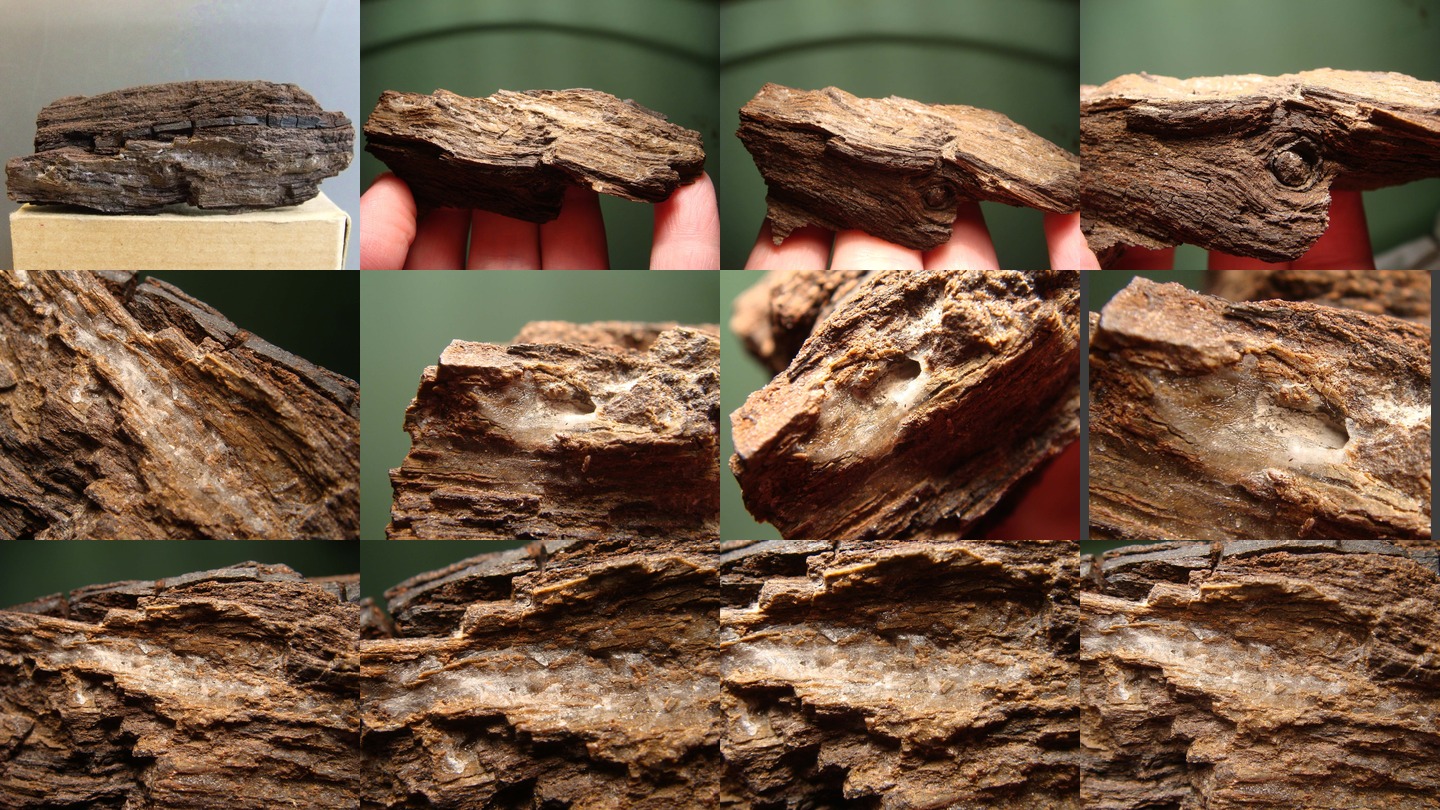
A large miniature of colorless hartite (α-phyllocladane) crystals on fossilized wood from the Bilina coal mine, Bilina, North Bohemia, Czech Republic. Thanks to Robert Vano's auction on eBay for the specimen and the images! |
|
| Row 4 |
|---|
 Hatchettite
A micro of white hatchettite on matrix from Monte Falo, Savigno, Bologna Province, Emilia-Romagna, Italy. Hatchettite is a mineral wax (a mixture of paraffins) and is also called "mountain tallow", adipocerite, and naphthine - the carbon:hydrogen ratio varies from 1:1 to over 1:2 (C38H78) and melts around 55 - 65°C. Thanks to Paolo Bracci's auction on eBay for the specimen and the image! |
|
 Hoelite
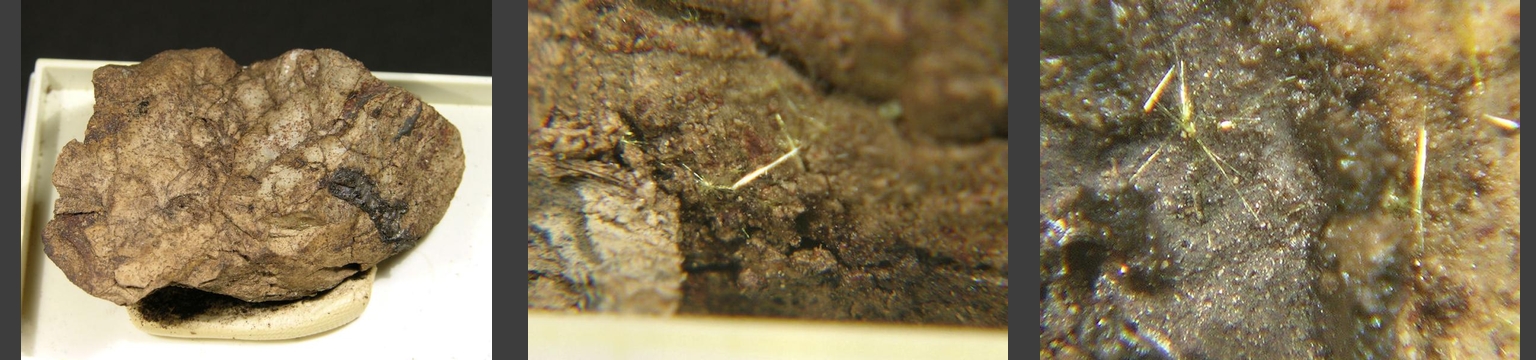
A rich miniature of tiny glassy yellow needles of hoelite (see closeups, larger image) on matrix from Kladno, Central Bohemia Region, Bohemia, Czech Republic. It is the same as synthetic 9,10-anthraquinone. Ex: Volkwein Collection # H3-25. Thanks to Dieter Obrecht's The NetMine auction on eBay for the specimen and the images! |
|
 Humboldtine
 (humboldtite) is ferrous (iron) oxalate dihydrate and it occurs here as rusty patches on an epidote matrix. This large miniature comes from Salida, Chaffee County, Colorado. It's the iron analog of weddellite (calcium), glushinskite (magnesium) and lindbergite (manganese). Thanks to Thomas Bee's auction on eBay for the specimen and the image! |
|
| Row 5 |
|---|
 Julienite
A capsule of light-blue julienite (sodium tetrathiocyanatocobaltate(II) octahydrate) laths on matrix from the type and only locality of Shamitumba, Shinkolobwe, Katanga Copper Crescent, Katanga,
Democratic Republic of Congo. Thanks to Tony Nikischer at the Excalibur Mineral Company for the specimen! | |
|
 Kladnoite
A micro of whiteish kladnoite (phthalimide) on matrix from the type locality of the Kladno (coal) Mine, Libusin, Kladno, Central Bohemia Region, Bohemia, Czech Republic. Thanks to Paolo Bracci's auction on eBay for the specimen and the image! | |
|
 Kratochvilite
A capsule of white kratochvilite from Zastavka, Brno, Vychodocesky, Moravia, Czech Republic. Most references consider it to be the same as fluorene, but more study is needed on the type material. Thanks to Lester Burgess' auction on eBay for the specimen! |
|
| Row 6 |
|---|
 Kratochvilite
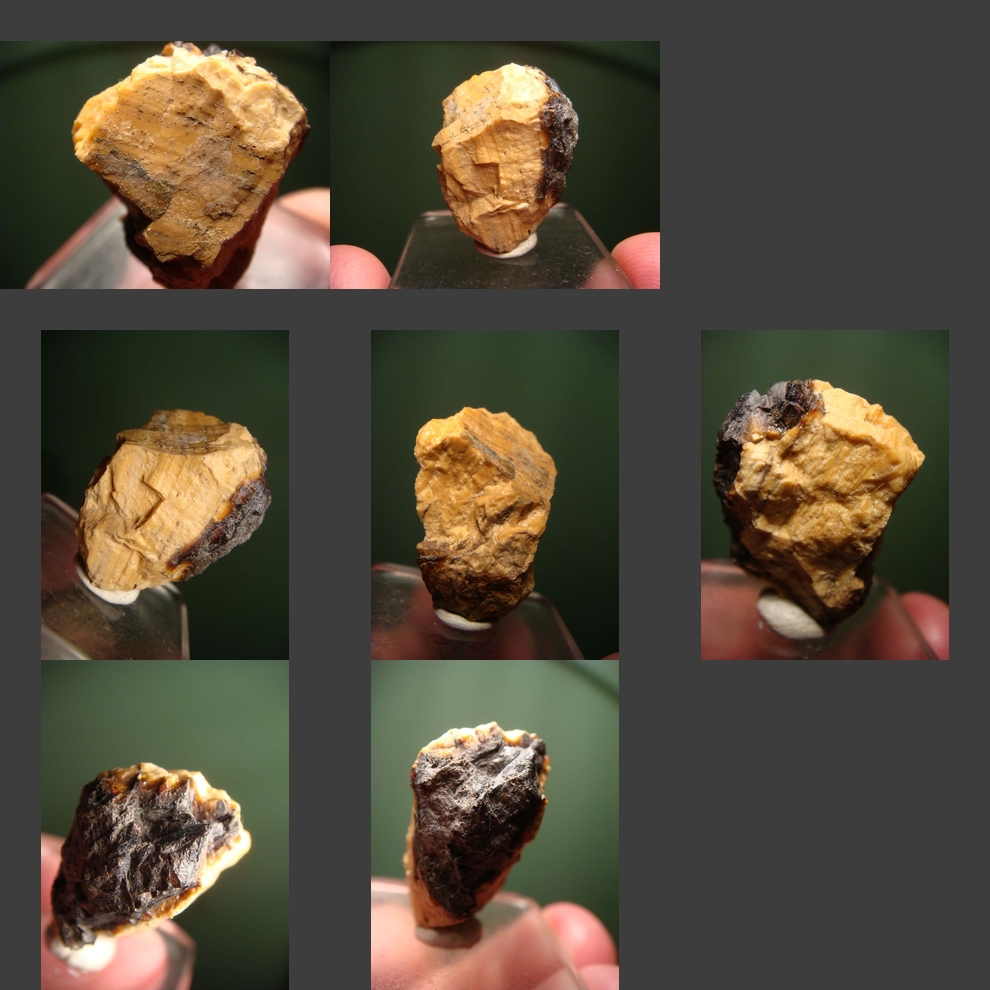
A thumbnail of tan kratochvilite on matrix from the Carola (coal) Mine, Freital, Saxony, Germany, It has a Mineral Zone tag. My white kratochvilite specimen is probably purer since synthetic fluorene is white. Thanks to David Garske's auction on eBay for the specimen! |
|
 Lindbergite
Shallow vugs of white lindbergite (manganese(II) oxalate dihydrate) comprise this micro from the type locality of the Boca Roca claim, Sapucaia do Norte, Galileia, Doce valley, Minas Gerais, Brazil. It's the manganese analog of humboldtine, and was only named in 2003. Thanks to Lester Burgess' auction on eBay for the specimen! | |
|
 Mellite
An excellent miniature of honey-colored mellite (aluminum mellitate) from the lignite mine at Csordakut, near Bicske, Fejer County, Hungary. Mellite crystals from here sometimes reach 5 - 6cm. Mellitic acid was first discovered in this mineral in 1799 [Wikipedia entry]. Thanks to Charles Klemens' auction on eBay for the specimen and the images! |
|
| Row 7 |
|---|
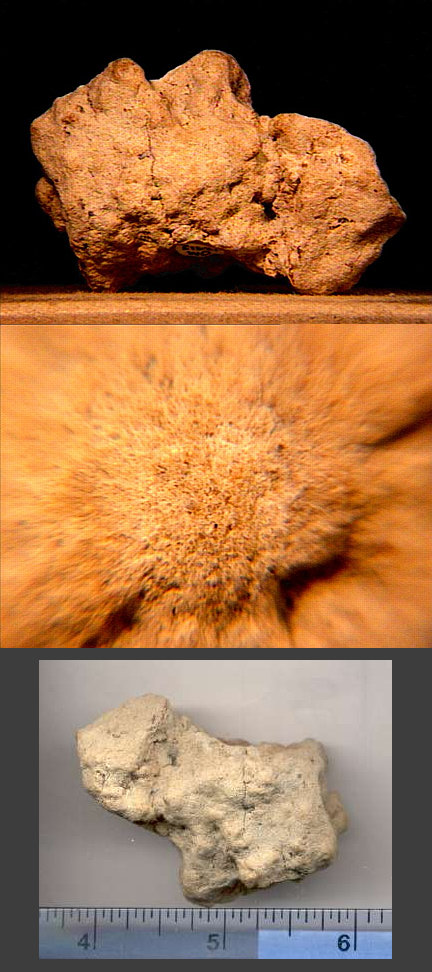
 Ozocerite
A large miniature of ozocerite (mineral wax) from somewhere in Utah. Ex: Oldach Collection with a Hacklebarney Museum (Merchantville, NJ) tag. Thanks to Vince Olsovsky's auction on eBay for the specimen and the images! |
|
 Ozocerite
A micro of reddish-black ozocerite from Boryslav, L'viv Oblast', Ukraine. Thanks to Paolo Bracci's auction on eBay for the specimen and the images! |
|
 Pyrobitumen
A micro of pyrobitumen (essentially polymerized petroleum) from the Green River formation in Uintah County, Utah. Some references consider it the same as anthraxolite. Thanks to Paolo Bracci's auction on eBay for the specimen and the image! |
|
| Row 8 |
|---|
 Quisqueite
An old! (see the larger image's tag) brittle, black miniature of quisqueite (a vanadium-rich sulfurous lignite) from the type locality of the Quisque mining district (Minasaragra), Cerro de Pasco, Pasco province, Pasco department, Peru. It's associated with patronite and when burned leaves behind a highly-vanadiferous ash. Quisqueite can also refer to a sulfur-rich asphaltum - usually spelled quiscqueite. Thanks to Ernest Porterfield's auction on eBay for the specimen! | |
|
 Retinite
A miniature of massive light-brown glassy retinite (a resin containing no succinic acid and with oxygen content from 6 to 15%). The only location I have for this is Balaneer, Jeviko, Czech Republic - neither of which is in MinDat or wikipedia. Ex: Ralph E. Merrill (Minerals Unlimited) personal collection. Ex: Charlie S. Watson Jr. collection. Comes with Filer's and Mineral Zone tags. Thanks to David Garske's auction on eBay for the specimen and the image! |
|
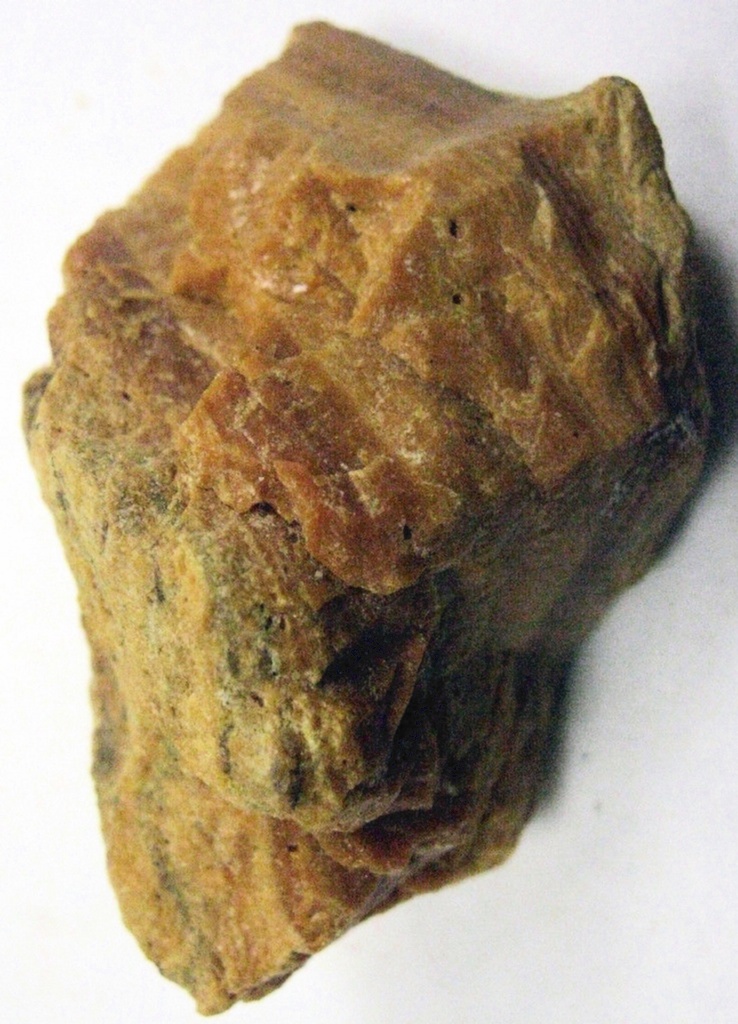
 Siegburgite
Tiny orange grains of siegburgite, a naturally occuring (fossil) polystyrene resin, in sandstone [miniature] from the type locality of Siegburg, Nordrhein-Westfalen, Germany. It has a 1920 - 1930 tag. Thanks to Thomas Bee's auction on eBay for the specimen and the image! | |
|
| Row 9 |
|---|
 Trinkerite
A rare micro of deep reddish-brown trinkerite (a hydrocarbon resin) on matrix from Golling, Salzburg, Austria. Ex. Fred d'Esopo Collection. Trinkerite from here has the composition 81.1%C 11.2%H 3.0%O 4.7%S. Thanks to Emilie & Ron Kendig's auction on eBay for the specimen and the images! |
|
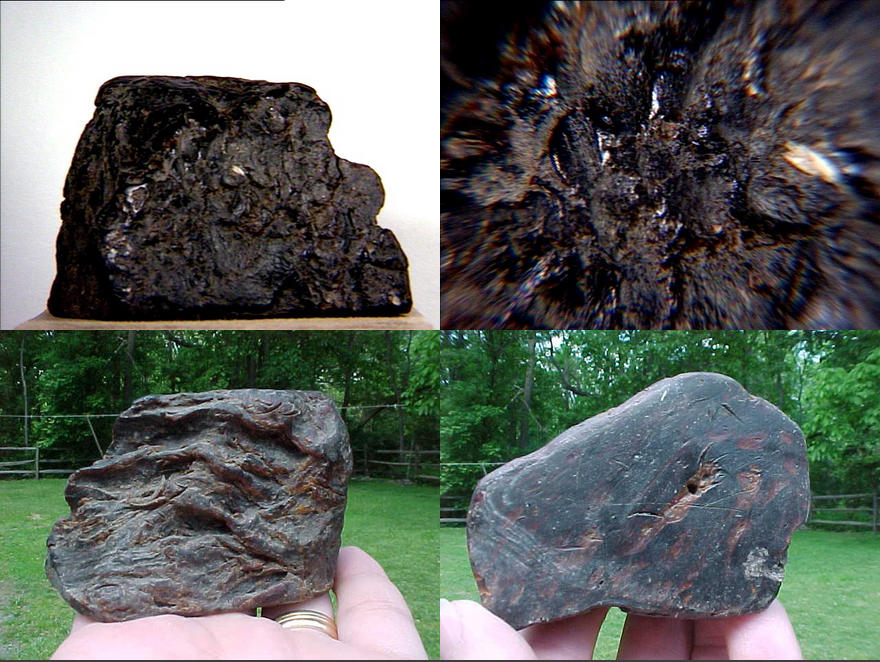
 Uintahite
's a natural hydrocarbon resin (asphalt) - this small cabinet piece of very pure "select grade" uintahite is from the type (and only) locality of the Uintah Valley, Uintah County, Utah. The commercial product is called gilsonite® after Samuel H. Gilson who was the first to promote it and mine it commercially in the 1880s, after discovering that it can be used as waterproofing and wire insulation. His company, American Gilsonite Company (AGC), founded in 1888, is still in existence today. The source of the uintahite is believed to be kerogen in the Green River formation deep below the Uintah basin in eastern Utah. Thermal reduction and pressure, over time, created the deposits. This specimen was sold to me as gilsonite but since gilsonite has been a registered trademark of AGC since 1921, the mineral should always be referred to as uintahite, after the type locality. Thanks to Jan Garland's (Fine Rocks) auction on eBay for the specimen and the images! | |
|
 Uintahite
Another uintahite miniature, this one's from Fort Duchesne, Uintah County, Utah. It has a Mineral Zone (10 / 2008) tag. Thanks to David Garske's auction on eBay for the specimen! |
|
| Row 10 |
|---|
 Valchovite
An excellent thumbnail of very rare orange valchovite, polymerized sesquiterpene alcohol, from the coal mine at the type l;ocality of Valchov, Boskovice, South Moravia Region, Moravia, Czech Republic. Unfortunately, valchovite is also the name of a high-temperature drilling powder - I'm not aware of any connection between the two. Thanks to Robert Vano's auction on eBay for the specimen and the images! | |
|
 Weddellite
An excellent miniature of a group of brown weddellite (calcium oxalate dihydrate) crystals in a vug from somewhere near Biggs in Wasco County, Oregon. Thanks to Michael Swanson's auction on eBay for the specimen! |
|
 Weddellite
A good micro of tan weddellite on matrix from the Buca della Vena Mine, Ponte Stazzemese, Stazzema, Apuan Alps, Lucca Province, Tuscany, Italy. Thanks to Paolo Bracci's auction on eBay for the specimen and the image! |
|
| Row 11 |
|---|
 Weinstein
Not really a mineral, but these sharp weinstein ("wine stone") potassium bitartrate crystals often occur on corks and in wine barrels. This one's from Tuscany, Italy. Thanks to David Garske's auction on eBay for the specimen! |
|
 Whewellite
A thumbnail aggregate of whewellite (calcium oxalate monohydrate) crystals from Hartenstein, Saxony, Germany, Thanks to C. Carter Rich's table at the 2003 Carnegie Gem & Mineral Show for the specimen! |
|
 Wurtzilite
 is one of the many naturally- occurring hydrocarbons - it's said to be more elastic than the others. The wurtzilite structure is as yet undetermined but appears to contain isoprene sulfur linkages (as a result of low-temperature natural vulcanization) similar to rubber. This micro comes from Uintah County in Utah. Thanks to Paolo Bracci's auction on eBay for the specimen! |
|