

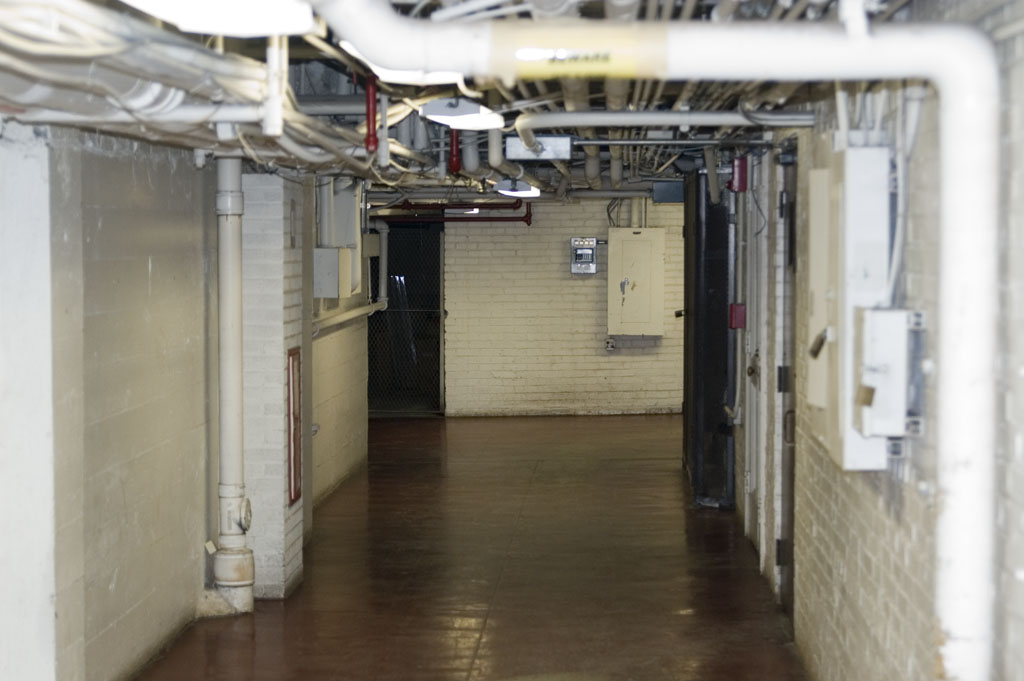
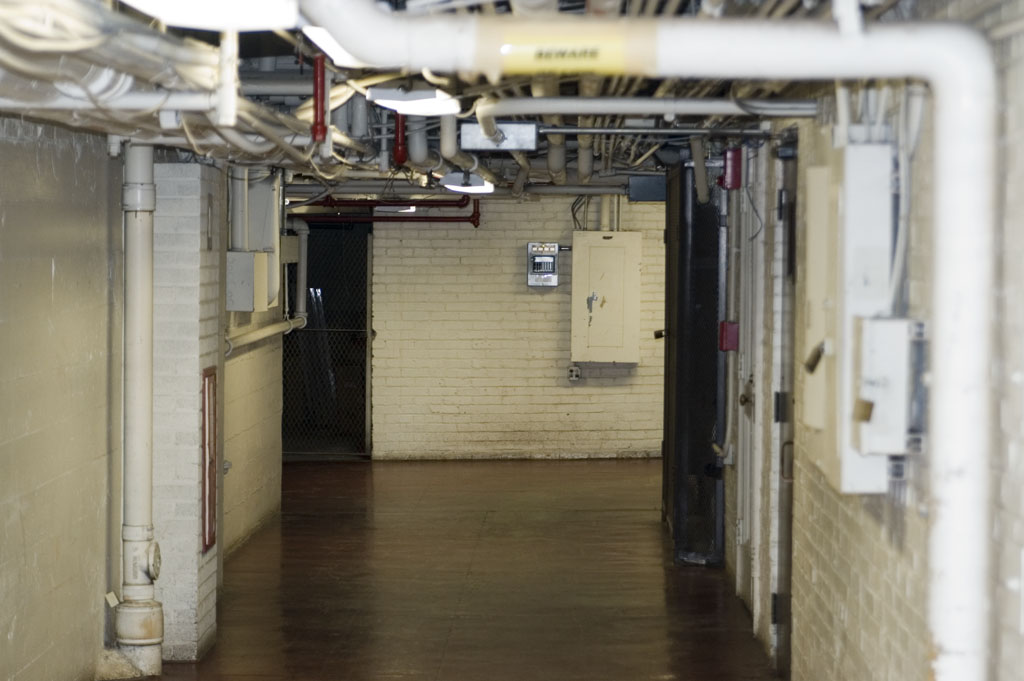
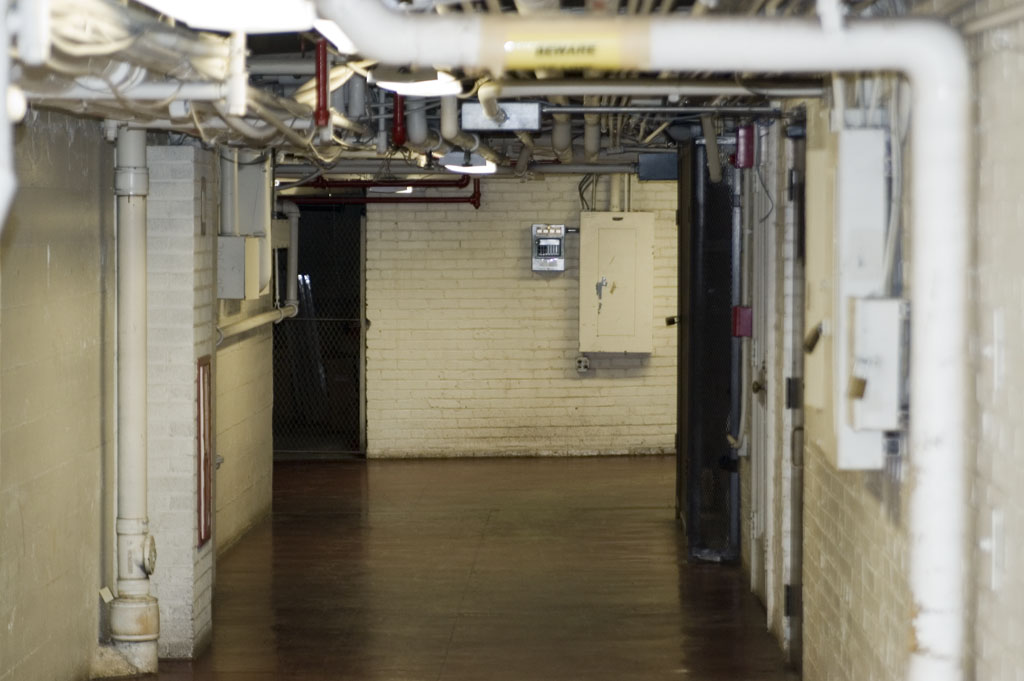
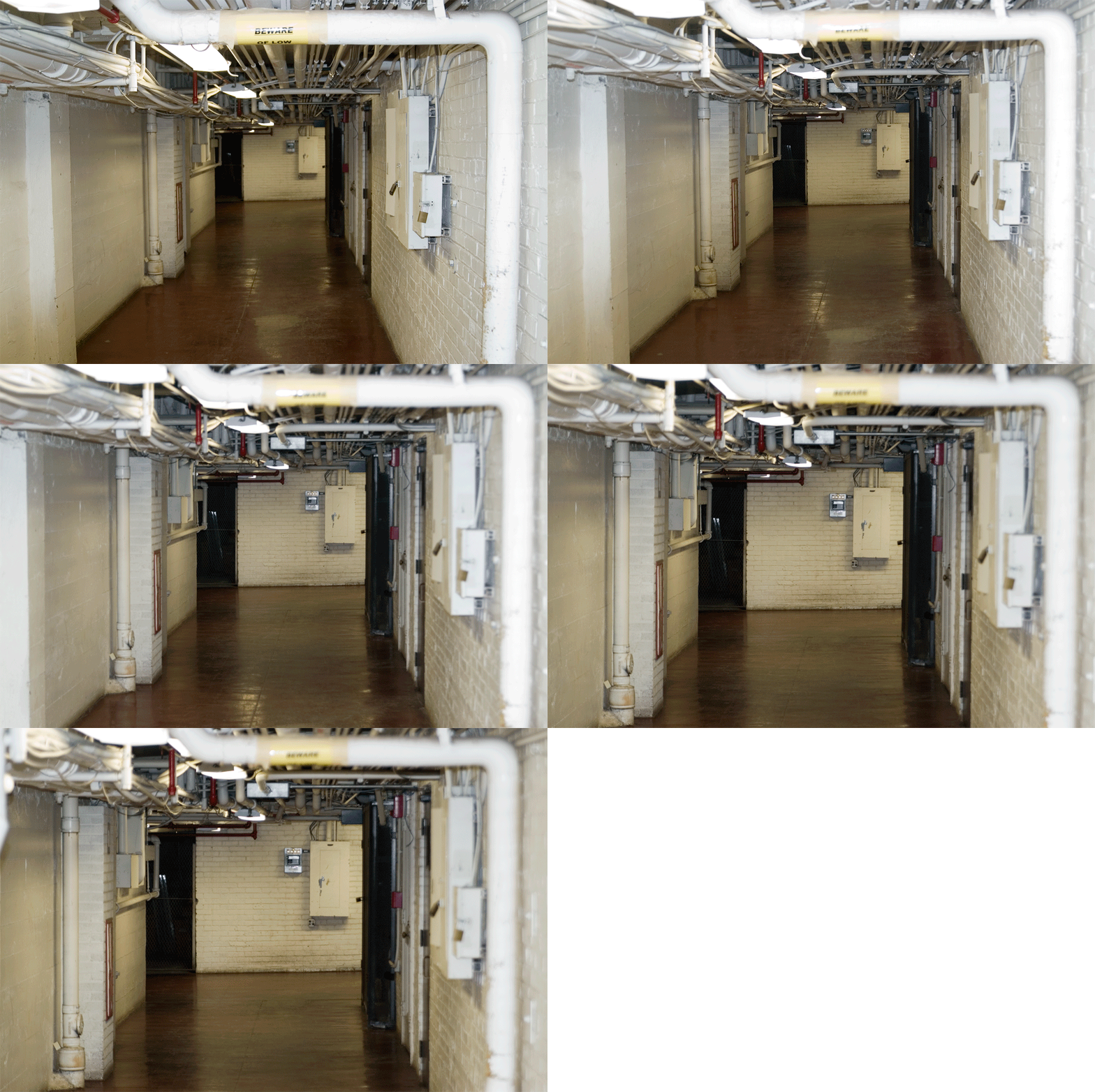

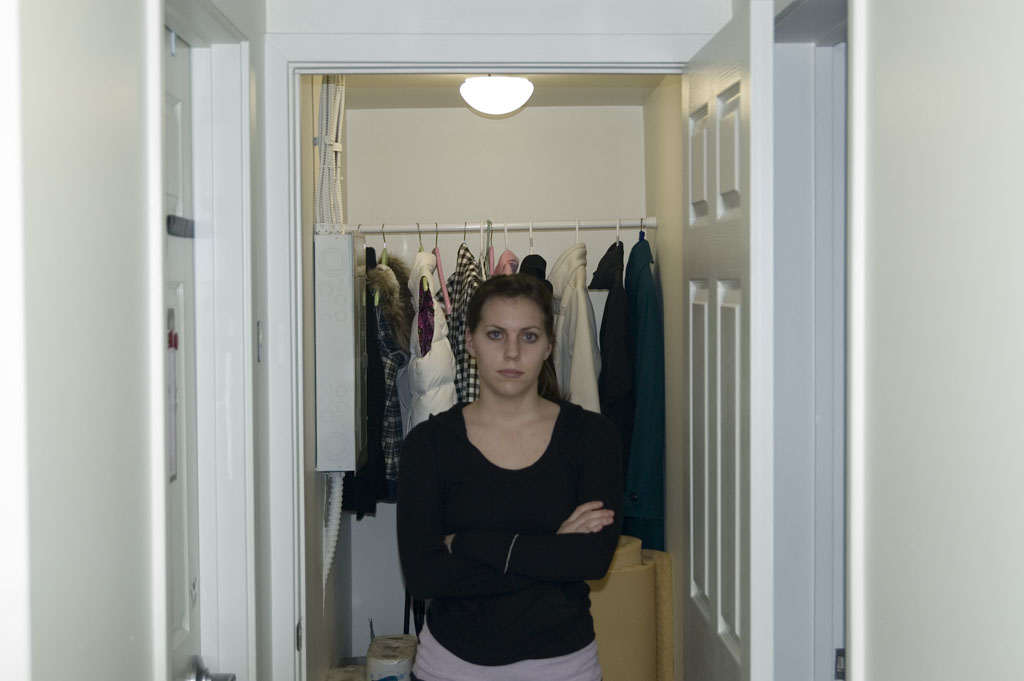

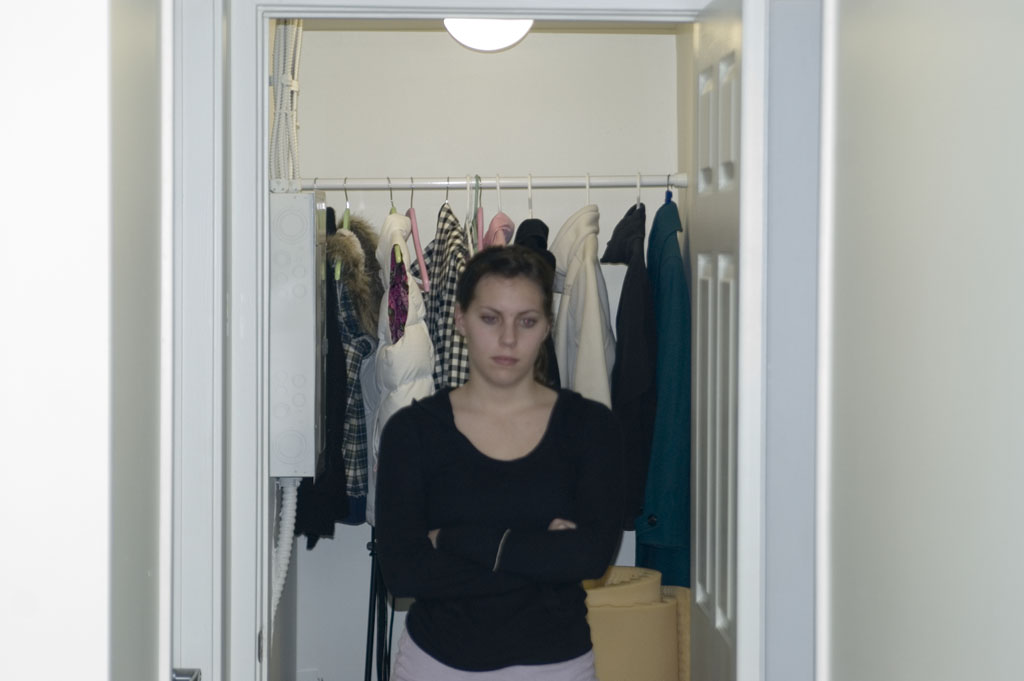

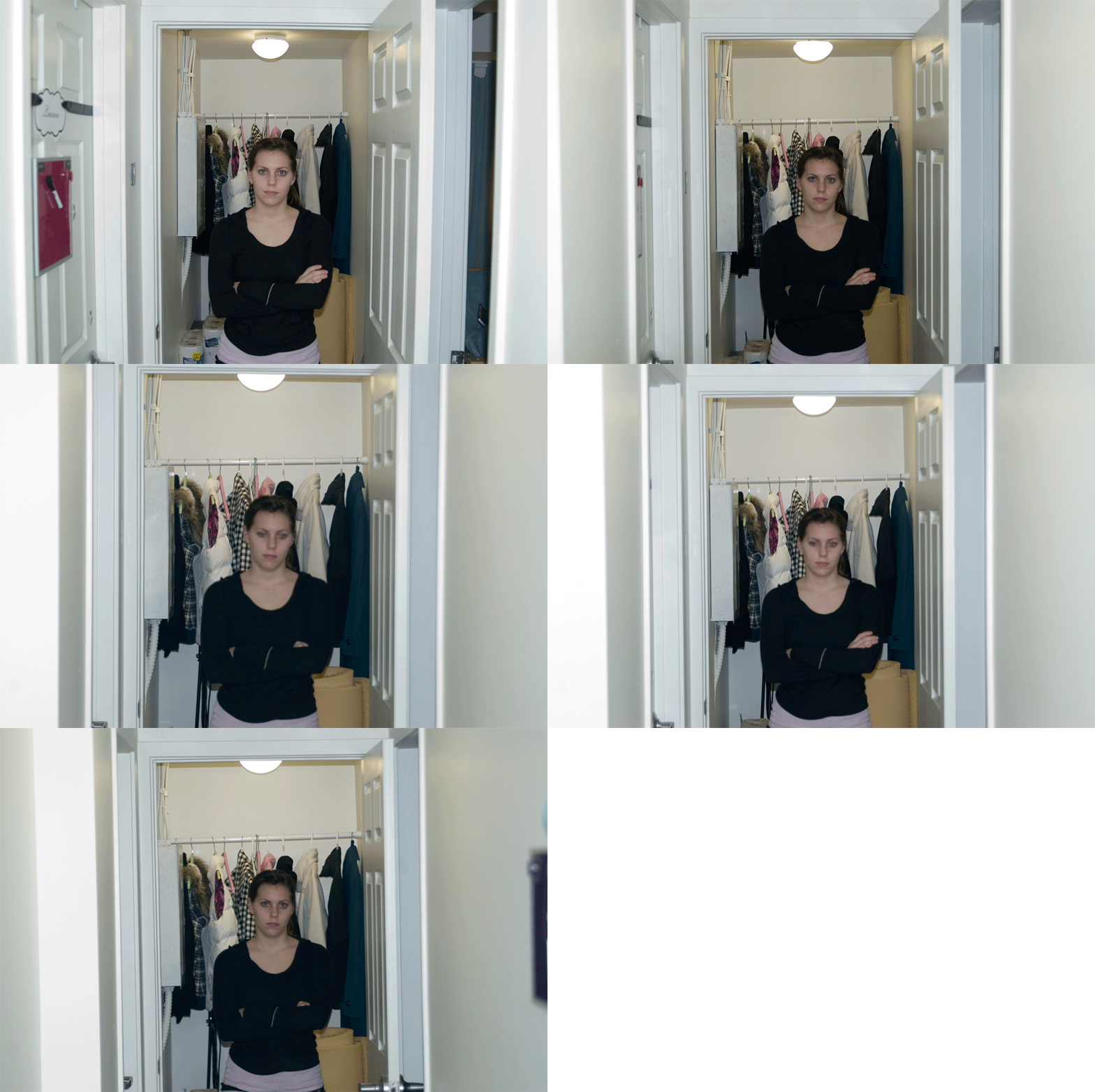
I used a Nikon D70 DSLR with a 28-75mm macro zoom lens.
How I selected a location:
The location had to have an object in the center of the scene which could be kept at a constant size in each frame of the sequence (pipe in foreground, person)
The location had to be a narrow enclosure so that there would be objects in the periphery of the image (walls and ceiling in both cases)
There had to be dynamic details in the periphery of the location so that the viewer realizes that the surroundings are changing from frame to frame
How I know I achieved the Vertigo effect:
In the first scene, the pipe in the foreground remains virtually the same while the depth of the far wall changes from frame to frame.
In the second scene, the size of the person remains relatively constant while the details in the side walls of the hallway change. For example, in the first frame, there is a doorway in the left wall. But in each subsequent frame, this doorway seems to get farther away from the viewer.
Difficulties I faced:
It was difficult to keep the size of the central object constant with respect to the size of the viewing plane.
Keeping the central object in the same location in the image was also problematic. It is clear that the location changes slightly from frame to frame.
The limited zoom capability of the lens I used only allowed me to move away from the object about 10 feet or so from the first frame to the last frame. In my opinion, this limits how dynamic the Vertigo effect seems to the user.
Using a still-image camera made it very difficult to make the image sequence appear smooth. Obviously, using a video camera would make a much more realistic Vertigo effect.